
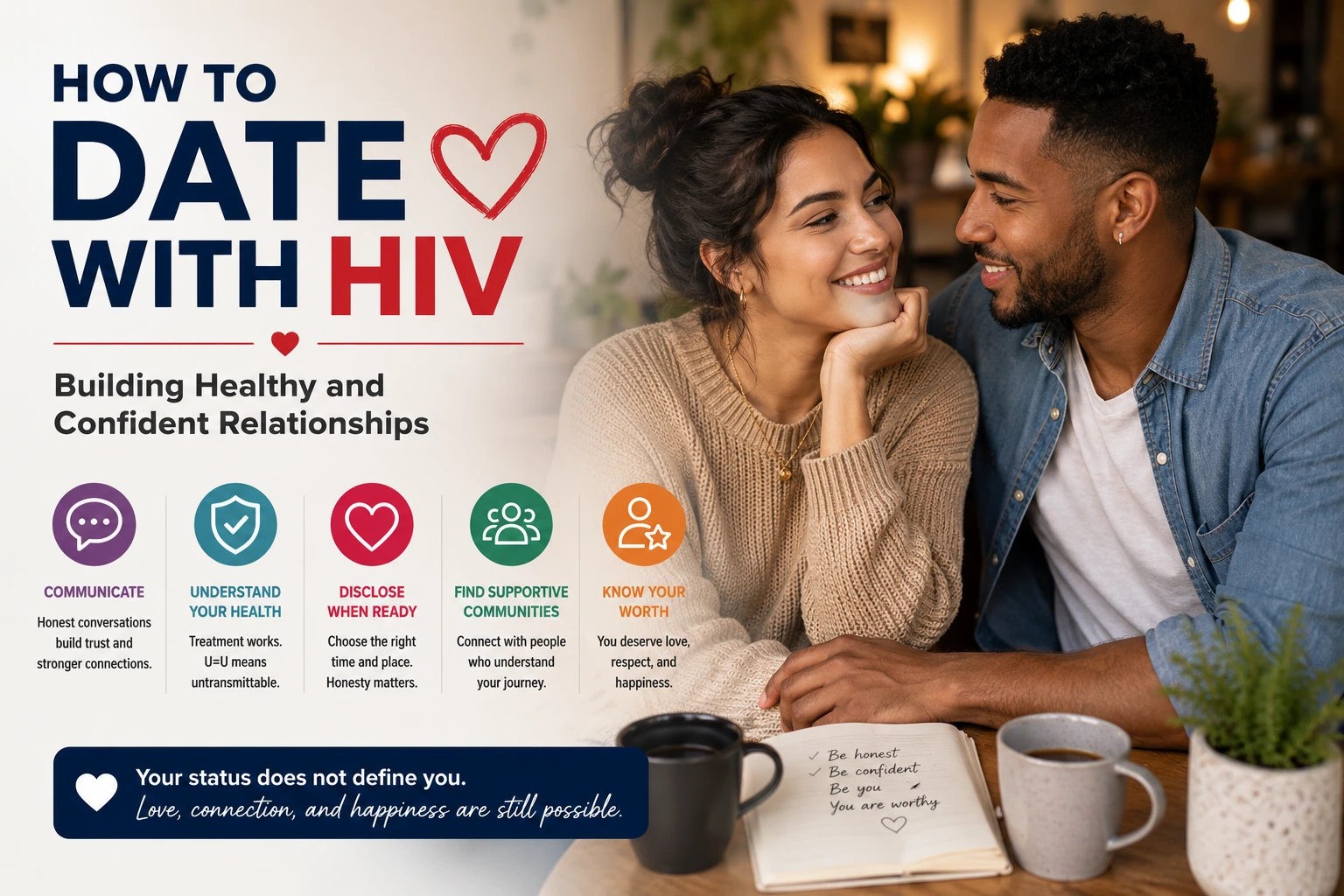
How to Date With HIV: Building Healthy and Confident Relationships
How to Date With HIV: Building Healthy and Confident Relationships
Dating with HIV may feel challenging at first, especially after diagnosis, but having HIV does not prevent you from finding love, connection, or meaningful relationships.
Thanks to medical advancements, increased awareness, and supportive dating communities, many people living with HIV continue to date confidently and build healthy partnerships.
At Meet Positives, we believe that an HIV diagnosis is only one part of your story—not the whole story.
You Are More Than Your Diagnosis
One of the biggest challenges people face after an HIV diagnosis is the emotional impact. Fear of rejection and stigma can make dating feel overwhelming.
But HIV does not define your value, personality, or ability to love and be loved.
Healthy relationships are built on:
- Trust
- Communication
- Respect
- Emotional connection
Your diagnosis is only one part of your story—not your entire identity.
For additional support, visit our Mental Health & Stigma resources.
Understand Your Health and Treatment
Learning more about HIV and your treatment plan can help rebuild confidence in dating.
According to the CDC, many people living with HIV achieve healthy outcomes through consistent treatment and medical care.
Many individuals living with HIV achieve undetectable viral loads through proper treatment.
U=U (Undetectable = Untransmittable) means that individuals who maintain an undetectable viral load cannot sexually transmit HIV to their partners.
This has been confirmed by both the CDC and the National Institutes of Health (NIH).
Understanding your health status can help reduce fear and improve communication with potential partners.
When to Disclose Your HIV Status
Disclosure is one of the most common concerns when dating with HIV.
You do not need to disclose your status immediately after meeting someone, but honesty is important before intimacy occurs.
Choose a calm and private moment when trust has started to develop.
A respectful disclosure conversation can strengthen trust rather than damage it.
Simple disclosure often works best:
“I want to share something important because I respect you. I’m living with HIV, and I manage it responsibly with treatment and regular care.”
If you're preparing for this conversation, read our guide on HIV Disclosure Dating: How to Have the Conversation With Confidence.
Choose Supportive Dating Environments
Many people living with HIV feel more comfortable using HIV-focused or STD-focused dating platforms where health conversations are normalized.
These communities can:
- Reduce stigma
- Make disclosure easier
- Create safer conversations
- Connect people with shared experiences
- Provide emotional support
Supportive dating spaces can make the process feel less isolating.
Explore:
Do Not Let Fear Control Your Dating Life
Rejection is part of dating for everyone—not just people living with HIV.
The right partner will:
- Respect your honesty
- Value communication
- Take time to understand
- See you beyond your diagnosis
Confidence grows when you focus on people who appreciate and respect you fully.
If you've experienced rejection after disclosure, our article on How to Handle Rejection After Disclosing an STD may help.
Healthy Relationships Are Still Possible
Millions of people living with HIV are in loving relationships, marriages, and families today.
Modern treatment and awareness have changed the reality of dating with HIV.
Love, intimacy, and long-term commitment are still possible.
Strong relationships are built on:
- Trust
- Communication
- Respect
- Support
- Understanding
Many serodiscordant couples—where one partner is HIV-positive and the other is HIV-negative—build successful and fulfilling relationships. Learn more in our article about Serodiscordant Couples.
Protecting Your Privacy and Safety
Dating should happen in an environment where you feel respected, secure, and supported.
Meet Positives provides helpful resources including:
Protecting your personal information and emotional well-being is an important part of building healthy relationships.
Final Thought
Dating with HIV may require honesty and important conversations, but it does not prevent real connection.
You are still worthy of love, companionship, intimacy, and healthy relationships.
The right people will respect your openness, support your journey, and value who you are beyond your HIV status.
With education, treatment, confidence, and support, meaningful relationships remain entirely possible.
Join the Meet Positives Community
Meet Positives helps people build meaningful relationships in a supportive and understanding environment.
You can join free, connect through our HIV Dating community, browse the STD Dating platform, explore Herpes Dating and HPV Dating, read our Dating Advice articles, visit the Safety Center, or learn more on the Meet Positives homepage.
Medical Disclaimer: This article is for informational purposes only and does not replace professional medical advice. Always consult a qualified healthcare provider regarding HIV treatment, testing, prevention, or your individual health concerns.
Share This Story, Choose Your Platform!
Current User
Comments (0)
Ask A Question
Have A Question, Personal Story, Or Situation You'd Like Help With? Share It Here. The More Context You Include, The More Thoughtful And Useful Our Guidance Can Be.
Our Editorial Team (And Occasional Relationship Contributors) May Choose Selected Submissions To Answer In An Upcoming Blog Post. All Submissions Are Reviewed And Published Anonymously—We Will Never Include Identifying Details.
Important:
If Your Question Is About Your Account, Billing, Upgrades, Reports, Or Technical Issues, Please Contact Customer Care Through The Help Pages So We Can Assist You Faster.
Tips For A Better Answer (Optional):
- Your Age Range + What You're Looking For (Dating, Friendship, Support)
- What You've Tried So Far
- What You're Hoping Happens Next
- Any Boundaries Or Dealbreakers You Want Respected
Responses Shared Here Are For General Information Only And Aren't Medical, Legal, Or Mental-Health Advice.
We Can't Provide Real-Time Or One-On-One Support Through This Form.