
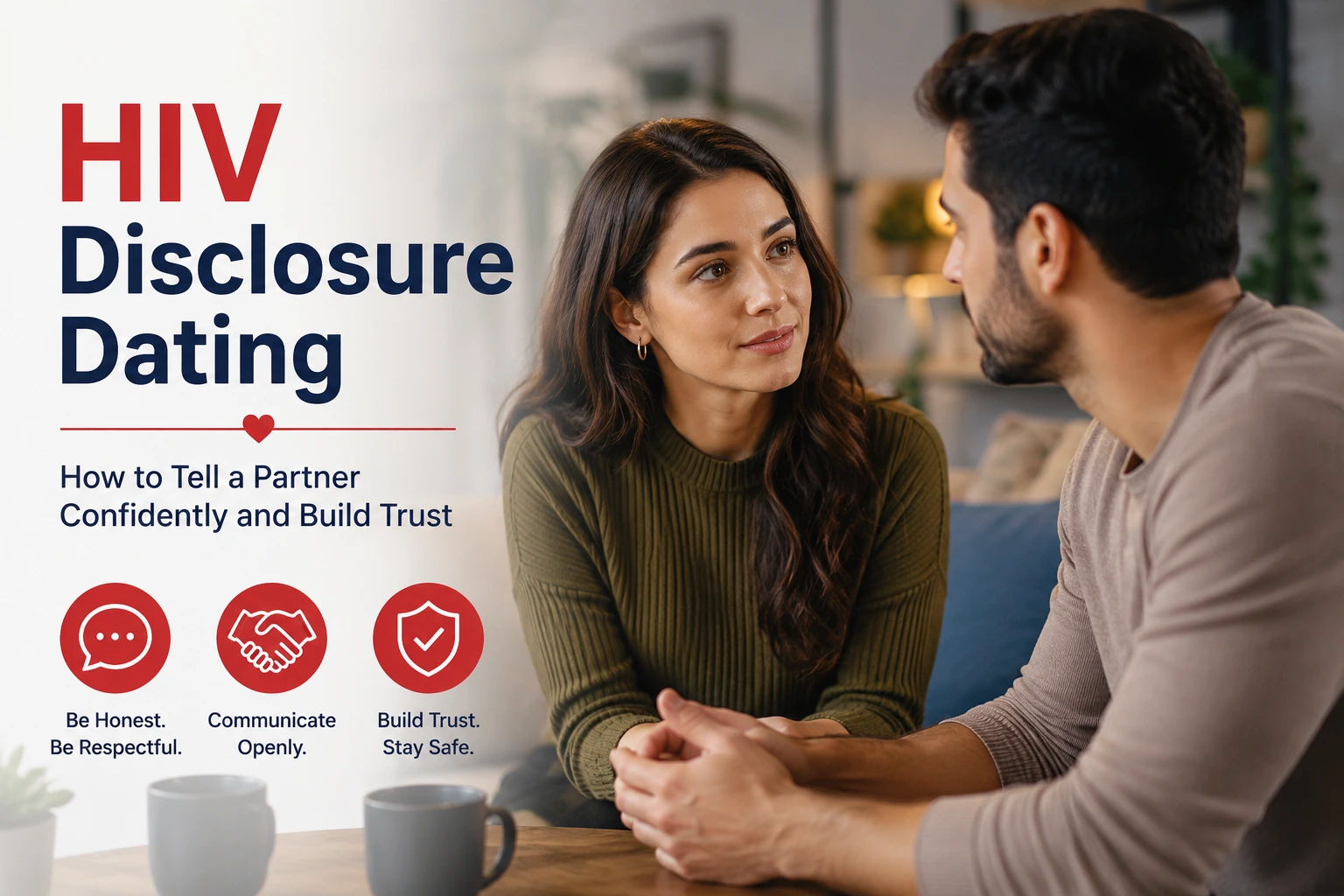
HIV Disclosure Dating: How to Have the Conversation With Confidence
HIV Disclosure Dating: How to Have the Conversation With Confidence
Dating while living with HIV can feel overwhelming, especially when it comes to disclosure. Many people worry about rejection, judgment, or saying the wrong thing. But having an honest conversation about your status is not something to be ashamed of—it is a sign of maturity, responsibility, and respect.
Disclosure can be difficult, but it also creates the foundation for trust, communication, and healthy relationships.
At Meet Positives, we believe that accurate information and open conversations help reduce stigma and empower people to date with confidence.
When Should You Disclose?
There is no perfect timeline for disclosure, but most experts agree that the conversation should happen before intimacy.
You do not need to share your status immediately after meeting someone, but it is important to discuss it once the relationship begins moving in a more serious or physical direction.
Choose a time when:
- You are both calm and comfortable
- You can speak privately without distractions
- You feel emotionally safe enough to be honest
- The relationship is developing beyond casual conversation
The CDC encourages open discussions about sexual health and HIV before intimacy so that both partners can make informed decisions.
Keep the Conversation Honest and Simple
Many people overthink disclosure because they fear they need to explain everything perfectly.
In reality, honesty and confidence matter far more than having the perfect script.
A simple approach may sound like:
“I want to be honest with you because I respect you. I’m living with HIV, and I manage it responsibly with treatment and regular care.”
You can answer questions if they have them, but you do not need to apologize for your condition.
The goal is not to seek approval. The goal is to create trust and allow both people to move forward honestly.
For additional guidance, read our STD Disclosure Dating Guide.
Understanding U=U
One of the most important medical advancements in HIV treatment is the concept of U=U (Undetectable = Untransmittable).
According to the CDC and the National Institutes of Health (NIH), people living with HIV who maintain an undetectable viral load through consistent treatment cannot sexually transmit HIV to their partners.
This scientific breakthrough has helped reduce fear, challenge stigma, and improve quality of life for millions of people living with HIV.
Understanding U=U can help make disclosure conversations more informed and productive.
Prepare for Different Reactions
Not everyone will respond the same way.
Some people may appreciate your honesty immediately, while others may need time to process the information or learn more about HIV.
Their reaction is not a reflection of your worth.
The right partner will:
- Listen respectfully
- Ask questions without judgment
- Value honesty and communication
- Respect your vulnerability
- Be willing to learn
Healthy relationships are built on understanding, not assumptions.
If you've experienced rejection after disclosure, our article on handling rejection after STD disclosure may help.
Dating With HIV Is Still Dating
Living with HIV does not mean your dating life is over.
Millions of people living with HIV continue to build healthy, loving, and long-term relationships.
Dating is still about:
- Connection
- Compatibility
- Trust
- Communication
- Shared values
Your diagnosis is only one part of your story. It does not define your personality, your goals, or your ability to love and be loved.
Managing Stigma and Protecting Your Mental Health
Fear of stigma remains one of the biggest challenges people living with HIV face.
Many individuals worry more about social reactions than the medical condition itself.
Helpful ways to protect your emotional well-being include:
- Educating yourself about HIV
- Connecting with supportive communities
- Focusing on respectful relationships
- Avoiding people who respond with judgment or misinformation
- Seeking professional support when needed
You can also explore our Mental Health & Stigma resources for additional support and encouragement.
Finding Supportive Dating Spaces
Many people find it easier to date within communities where health conversations are already normalized.
HIV-focused and STD-focused dating platforms help reduce anxiety around disclosure and create more understanding environments.
These communities encourage:
- Honesty
- Acceptance
- Education
- Support
- Meaningful connections
Meet Positives was created to provide a safe space where people living with HIV and other STDs can connect without fear of unnecessary judgment.
Explore our HIV Dating community and broader STD Dating platform.
Safety and Privacy Matter
Your personal health information deserves protection.
Meet Positives provides resources to help members date safely and confidently, including:
Final Thought
HIV disclosure is not about seeking permission to be loved.
It is about honesty, safety, respect, and finding someone who values open communication.
The strongest relationships are not built on secrecy—they are built on trust.
If you are living with HIV, remember this: you are still deserving of connection, intimacy, companionship, and meaningful relationships.
Education, treatment, and open communication have transformed what dating with HIV can look like today.
Join the Meet Positives Community
Meet Positives helps people build meaningful relationships in a supportive and understanding environment.
You can join free, connect through our HIV Dating community, browse the STD Dating platform, explore Herpes Dating and HPV Dating, read our Dating Advice articles, visit the Safety Center, or learn more on the Meet Positives homepage.
Medical Disclaimer: This article is for informational purposes only and does not replace professional medical advice. Always consult a qualified healthcare provider regarding HIV treatment, testing, prevention, and your individual health needs.
Share This Story, Choose Your Platform!
Current User
Comments (0)
Ask A Question
Have A Question, Personal Story, Or Situation You'd Like Help With? Share It Here. The More Context You Include, The More Thoughtful And Useful Our Guidance Can Be.
Our Editorial Team (And Occasional Relationship Contributors) May Choose Selected Submissions To Answer In An Upcoming Blog Post. All Submissions Are Reviewed And Published Anonymously—We Will Never Include Identifying Details.
Important:
If Your Question Is About Your Account, Billing, Upgrades, Reports, Or Technical Issues, Please Contact Customer Care Through The Help Pages So We Can Assist You Faster.
Tips For A Better Answer (Optional):
- Your Age Range + What You're Looking For (Dating, Friendship, Support)
- What You've Tried So Far
- What You're Hoping Happens Next
- Any Boundaries Or Dealbreakers You Want Respected
Responses Shared Here Are For General Information Only And Aren't Medical, Legal, Or Mental-Health Advice.
We Can't Provide Real-Time Or One-On-One Support Through This Form.