
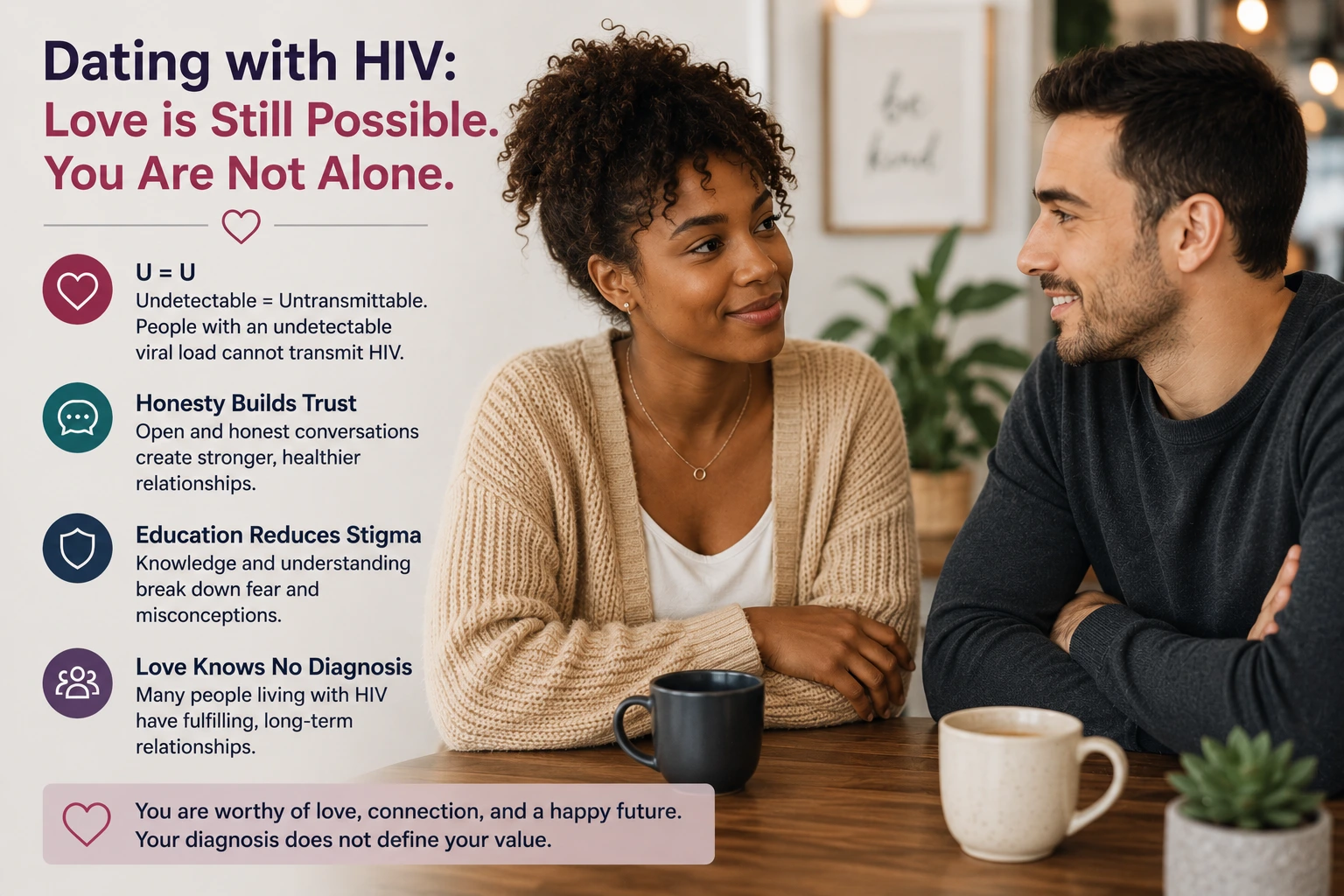
Dating with HIV: Real Disclosure Stories and Success Tips
Dating with HIV: Real Disclosure Stories and Success Tips
For many people, an HIV diagnosis initially feels emotionally overwhelming—especially when thinking about dating, intimacy, and future relationships.
Fear of rejection, stigma, misunderstanding, and disclosure anxiety are extremely common concerns after diagnosis.
Many people living with HIV ask:
- “Will anyone still date me?”
- “When should I disclose?”
- “How do I explain U=U?”
- “Can I still have a normal relationship?”
The good news is that many people living with HIV eventually discover that healthy, loving, and emotionally fulfilling relationships are still absolutely possible.
This guide explores real disclosure experiences, common dating concerns, and what many people wish they knew earlier.
The Emotional Impact of Dating with HIV
Many people report that the emotional side of an HIV diagnosis feels harder than the medical side at first.
Common emotional reactions may include:
- Fear of rejection
- Shame
- Anxiety
- Loneliness
- Fear of disclosure
- Loss of confidence
However, many long-term HIV community members repeatedly emphasize that these emotions often improve significantly with time, education, support, and experience.
If you're struggling emotionally after diagnosis, you may also find support in:
- Dating After an HIV Diagnosis: Rebuilding Confidence and Connection
- Poz Dating: Finding Love and Connection While Living with HIV
Understanding U=U
One of the biggest breakthroughs in HIV education is the concept of U=U:
Undetectable = Untransmittable.
Research shows that people living with HIV who maintain an undetectable viral load through consistent treatment cannot sexually transmit HIV to partners.
For many people, learning about U=U becomes life-changing because it helps reduce fear, shame, and misinformation.
According to the CDC, people who maintain an undetectable viral load through treatment effectively have no risk of sexually transmitting HIV.
Why HIV Stigma Still Exists
Despite major medical advancements, HIV stigma remains deeply rooted in outdated information and fear.
Many people living with HIV report worrying that others may:
- Misunderstand transmission
- Assume HIV defines them
- React emotionally instead of factually
- View them differently after disclosure
Unfortunately, misinformation about HIV still exists online and in everyday conversations.
Education is often one of the most powerful tools for reducing stigma and helping others understand the realities of modern HIV treatment.
What Real People Say About Disclosure
Across HIV support communities, many people say disclosure became easier once they:
- Learned accurate HIV information
- Stopped viewing themselves negatively
- Practiced calm communication
- Became more confident discussing U=U
Many people also say their fear before disclosure was often worse than the conversation itself.
For practical guidance, visit:
- HIV Disclosure Dating: How to Have the Conversation with Confidence
- How to Tell Someone You Have an STD Without Fear
When Should You Disclose?
There is no universally "perfect" timeline for disclosure.
However, many people prefer disclosure:
- Before intimacy happens
- After emotional trust develops
- In private and calm settings
- During honest conversations
Many people feel disclosure goes better when approached confidently rather than fearfully.
Honesty allows both people to make informed decisions while building trust and mutual respect.
What Healthy HIV Disclosure Often Sounds Like
Many people living with HIV recommend calm, informative conversations instead of apology-based disclosure.
Examples may sound like:
- “I’m living with HIV, but I’m undetectable and healthy.”
- “I believe in honesty before intimacy.”
- “I’m happy to answer questions if you have them.”
Confidence, emotional maturity, and accurate information often shape the conversation positively.
You don't need to apologize for your diagnosis. Instead, focus on honesty, responsibility, and open communication.
Can People with HIV Still Have Healthy Relationships?
Absolutely.
Many people living with HIV continue building:
- Long-term relationships
- Marriage
- Families
- Healthy intimacy
- Emotionally fulfilling partnerships
Many supportive partners care more about:
- Trust
- Communication
- Emotional connection
- Honesty
than outdated stigma.
Learn more about building healthy relationships:
- Serodiscordant Couples: Building Healthy Relationships with Different HIV Statuses
- How to Date with HIV: Building Healthy and Confident Relationships
What Many People Wish They Knew Earlier
Across HIV communities, several recurring themes appear:
- Life absolutely continues after diagnosis
- U=U changes dating conversations dramatically
- Supportive partners still exist
- Confidence improves with time
- Stigma is often worse than reality
Many people say education and support helped them emotionally recover far more than fear or isolation.
According to HIV.gov, effective treatment allows many people living with HIV to live long, healthy lives while maintaining viral suppression.
You Are More Than Your Diagnosis
An HIV diagnosis does not define your worth, attractiveness, character, or future relationships.
Millions of people living with HIV continue to find love, companionship, intimacy, and long-term commitment.
Meet Positives supports informed, respectful, and emotionally safe conversations around HIV, disclosure, and relationships through its:
FAQ
Can people living with HIV still date normally?
Yes. Many people living with HIV continue building healthy, fulfilling, and long-term relationships.
What does U=U mean?
U=U stands for Undetectable = Untransmittable, meaning people with an undetectable viral load cannot sexually transmit HIV.
When should someone disclose HIV to a partner?
Many people prefer disclosure before intimacy but after some emotional trust has formed.
Does HIV disclosure become easier over time?
Many people report that disclosure becomes less emotionally overwhelming with confidence, education, and experience.
Can people with HIV still have families and marriages?
Yes. Many people living with HIV continue having healthy marriages, families, and emotionally fulfilling lives.
Medical Disclaimer
This article is for educational and informational purposes only and should not be considered medical advice. Always consult qualified healthcare professionals regarding HIV testing, diagnosis, treatment, viral suppression, transmission risks, or sexual health concerns.
Bottom Line
Dating with HIV may feel emotionally difficult at first, but many people eventually discover that healthy relationships, love, intimacy, and emotional connection are still completely possible.
Education, U=U awareness, confidence, and honest communication often reduce fear far more effectively than stigma or secrecy ever could.
Join the Meet Positives Community
Looking for supportive connections and understanding? Meet Positives provides a stigma-free environment where people living with HIV and other STDs can build meaningful relationships with confidence.
You can join free, visit our HIV Dating community, explore our STD Dating platform, browse additional Dating Advice resources, visit the Safety Center, or learn more on the Meet Positives homepage.
Share This Story, Choose Your Platform!
Current User
Comments (0)
Ask A Question
Have A Question, Personal Story, Or Situation You'd Like Help With? Share It Here. The More Context You Include, The More Thoughtful And Useful Our Guidance Can Be.
Our Editorial Team (And Occasional Relationship Contributors) May Choose Selected Submissions To Answer In An Upcoming Blog Post. All Submissions Are Reviewed And Published Anonymously—We Will Never Include Identifying Details.
Important:
If Your Question Is About Your Account, Billing, Upgrades, Reports, Or Technical Issues, Please Contact Customer Care Through The Help Pages So We Can Assist You Faster.
Tips For A Better Answer (Optional):
- Your Age Range + What You're Looking For (Dating, Friendship, Support)
- What You've Tried So Far
- What You're Hoping Happens Next
- Any Boundaries Or Dealbreakers You Want Respected
Responses Shared Here Are For General Information Only And Aren't Medical, Legal, Or Mental-Health Advice.
We Can't Provide Real-Time Or One-On-One Support Through This Form.