
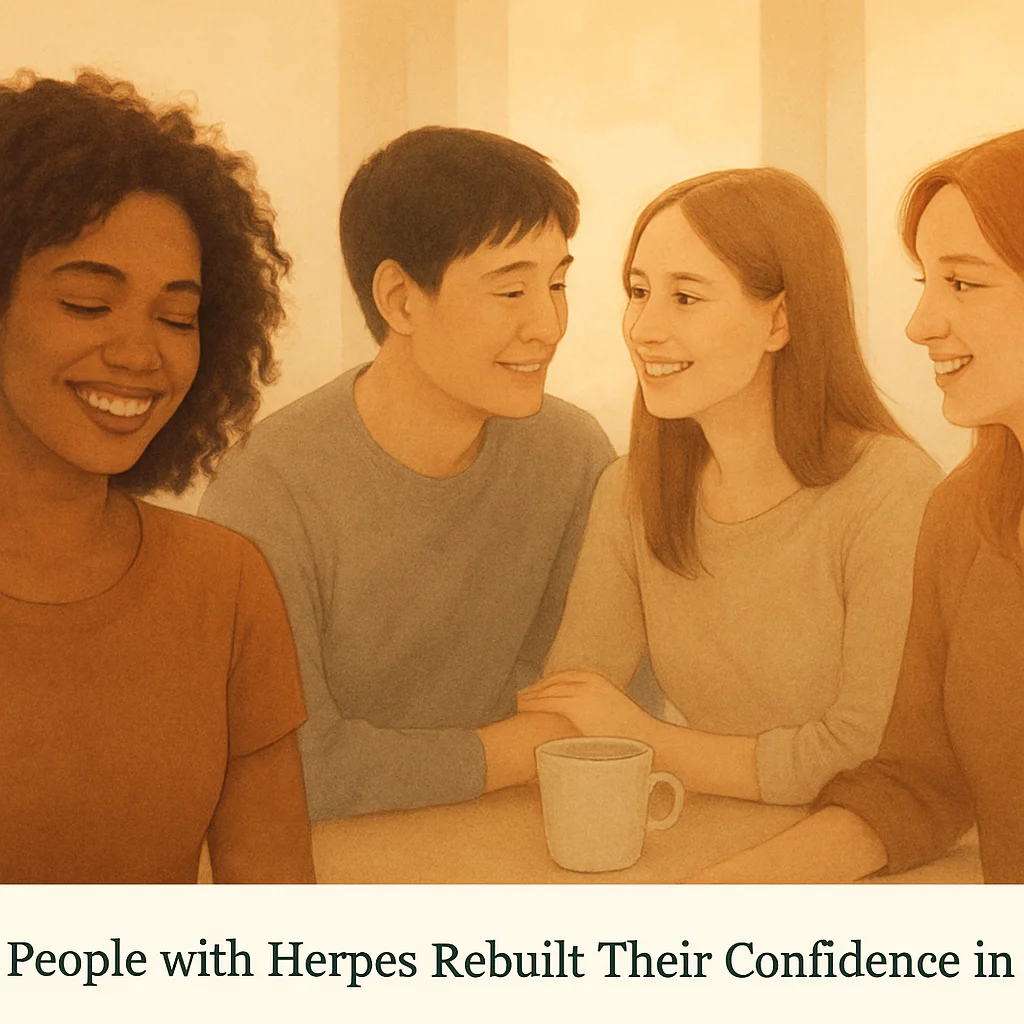
How People with Herpes Rebuilt Their Confidence in Dating
The night after getting a herpes diagnosis, many people make a quiet, private decision: I'm done dating. They tell themselves it's just temporary — that they need time to process. But weeks turn into months, and the fear of rejection starts to feel permanent. If that sounds familiar, what you're about to read is for you.
The Moment People Decided to Try Again
For most people in this community, the turning point wasn't a grand revelation. It was smaller than that.
It was reading one forum post from someone who'd been exactly where they were. It was a therapist gently pointing out that herpes is a skin condition, not a character flaw. It was realizing, sometimes years later, that the shame they were carrying belonged to outdated stigma — not to them.
One member of MeetPositives described it this way: "I spent eight months convinced no one would want me. Then I talked to someone on here who'd been married for six years, HSV-positive, completely open about it. That conversation broke something open in me."
That kind of human-to-human contact — hearing from someone who is actually living well — is what research backs up too. Studies on STI-related stigma consistently show that peer support and accurate information are the two factors most likely to reduce shame and improve quality of life after diagnosis.
What Actually Helped People Rebuild Confidence
When you ask people in this community what helped most, the answers cluster around a few specific things — not vague positivity, but concrete shifts.
Getting educated. Understanding what HSV actually is — and isn't — changes everything. The CDC estimates that roughly 1 in 6 people aged 14 to 49 have genital herpes, and the vast majority have no idea. When you realize you're in the company of millions — including people in relationships, people who are parents, people who are thriving — the isolation lifts a little.
Practicing disclosure in low-stakes ways. Many people found it helpful to tell a close, trusted friend before they ever told a date. Not for permission — just for practice. Saying the words out loud to someone safe made them easier to say later to someone who mattered romantically. You can find practical language for that conversation in our guide on what to say when you disclose HSV.
Reconnecting with their own self-worth outside of dating. Several people mentioned that they picked up something they'd abandoned — a sport, a creative project, a social group. Dating from a place of fullness, rather than desperation to prove you're still lovable, changes how you show up entirely.
Rejection Happened — and It Wasn't the End
Let's be honest about this part: some people did get rejected after disclosing. That's real, and it hurts. But the people who kept going noticed something interesting over time.
Rejection after disclosure tells you something useful fast. It filters out partners who aren't emotionally mature enough to have an adult conversation about sexual health. That's not the person you want to build something with anyway.
"Every rejection after disclosure shortened my list of people I'd have eventually been unhappy with. It sounds brutal, but it was actually clarifying." — MeetPositives community member
The fear of rejection also tends to shrink with repetition. The first disclosure conversation feels like walking off a cliff. By the third or fourth, it feels like a filter — something that shows you who is worth your time. Our piece on handling rejection after telling someone you have herpes goes deeper into this if you're at that stage.
The Relationships That Came After
The success stories in this community look different from each other — and that's the point.
Some people found partners who are also HSV-positive, where the disclosure conversation was simple and the shared experience created an early bond. Others found partners who were negative and educated themselves, accepted the risk, and never looked back. Some people found that what they most needed wasn't a romantic partner at all — it was a community of people who understood, and that belonging healed something deeper than any relationship could.
Research published in the Journal of Health Psychology found that people who disclosed their STI status to partners reported significantly higher relationship satisfaction and trust over time compared to those who concealed it. Honesty, even when it's terrifying, builds the kind of foundation that holds.
People in long-term relationships often say the diagnosis ended up being a strange gift — it forced conversations about health, boundaries, and honesty that many couples never have. It cleared away anyone who would have been a bad fit. It made them more selective, more intentional, and ultimately more connected to what they actually wanted.
What You Can Take From These Stories Today
You don't have to be at the finish line to benefit from other people's journeys. Here's what these stories point to, practically:
- Start with education. Know your status, your transmission risks, and your options. That knowledge becomes confidence.
- Find one person — just one — who knows your diagnosis and accepts you fully. A friend, a therapist, or someone in this community. That relationship rewires how you see yourself.
- Write a profile before you feel completely ready. Waiting for perfect confidence is waiting forever. Action creates confidence more reliably than the reverse. If you're not sure where to start, our guide on how to start dating after a herpes diagnosis walks you through it step by step.
- Give yourself a realistic timeline. Six months after diagnosis is not too soon. Two years later is not too late. There is no wrong time to try again.
The people in this community who found love — romantic, platonic, or self-directed — didn't find a magical workaround. They got honest with themselves, got educated, got connected, and kept showing up. That's the whole story. And it's one you can write too.
Share This Story, Choose Your Platform!
Kayla Bactung
Comments (0)
Ask A Question
Have A Question, Personal Story, Or Situation You'd Like Help With? Share It Here. The More Context You Include, The More Thoughtful And Useful Our Guidance Can Be.
Our Editorial Team (And Occasional Relationship Contributors) May Choose Selected Submissions To Answer In An Upcoming Blog Post. All Submissions Are Reviewed And Published Anonymously—We Will Never Include Identifying Details.
Important:
If Your Question Is About Your Account, Billing, Upgrades, Reports, Or Technical Issues, Please Contact Customer Care Through The Help Pages So We Can Assist You Faster.
Tips For A Better Answer (Optional):
- Your Age Range + What You're Looking For (Dating, Friendship, Support)
- What You've Tried So Far
- What You're Hoping Happens Next
- Any Boundaries Or Dealbreakers You Want Respected
Responses Shared Here Are For General Information Only And Aren't Medical, Legal, Or Mental-Health Advice.
We Can't Provide Real-Time Or One-On-One Support Through This Form.