
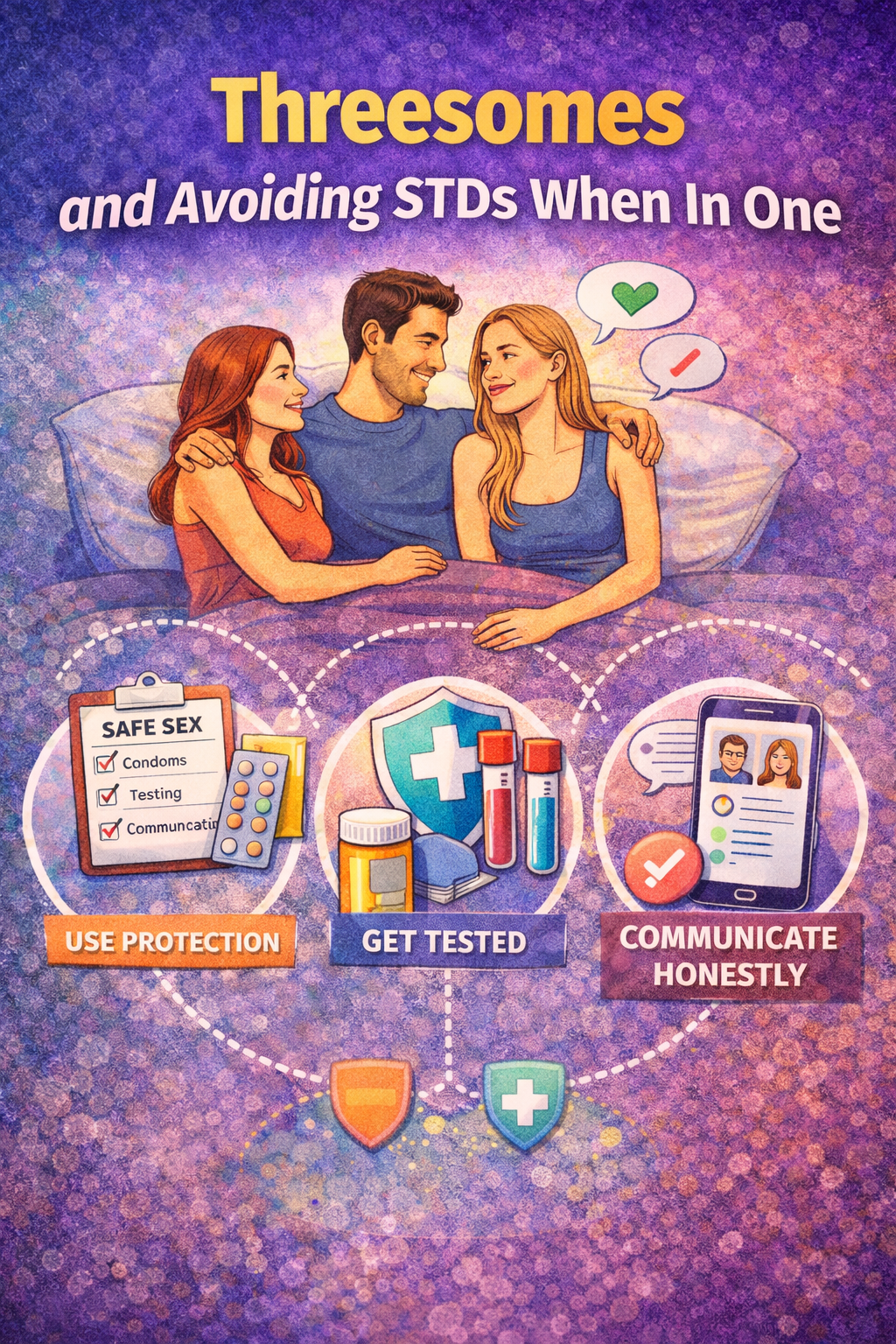
Threesomes and Avoiding STDs When In One
Medical disclaimer: This article is for informational purposes only and does not constitute medical advice. Always consult a qualified healthcare provider or sexual health clinic for guidance specific to your situation, including STI testing, prevention, and treatment.
So you have decided to explore a threesome. You have found the other participants, agreed on a time and place, and set your ground rules beforehand — that preparation is smart. But one conversation that should always be part of that prep is sexual health. In multi-partner situations, the potential for STI transmission increases, which means reducing risk before anything happens is essential.
The only guaranteed way to avoid transmission is abstinence, but for people who choose multi-partner sex, the goal is to make informed, harm-reducing choices at every step. Here is what that looks like in practice.
Use barrier protection — consistently
Finding a new partner is exciting. But when it comes to physical intimacy with someone new, consistency with barrier methods is non-negotiable. Condoms, internal (female) condoms, dental dams, and gloves all reduce transmission risk. Even if someone has shared their health background with you, no disclosure is a substitute for barrier use — be consistent every time.
Barrier protection significantly reduces — though does not eliminate — the risk of transmitting infections including HIV, gonorrhea, chlamydia, syphilis, herpes, and HPV. Pairing consistent barrier use with regular testing gives you the most complete picture of your health.
For a deeper look at how infections can spread even without symptoms, see our guide on asymptomatic spread, transmission risks, and protection strategies.
Get tested regularly — everyone involved
It may take multiple tests over time to get a clear picture of everyone's STI status. Regular testing is not a sign of distrust — it is a responsible habit, especially in multi-partner arrangements.
If you see the same person or group regularly, schedule checkups on a consistent cadence — at least every three to six months, or after any new partner contact. A clinician can identify infections before symptoms appear. Waiting until symptoms show up often means the window for preventing transmission to others has already passed.
⚠ Important: standard STD panels don't test for everything
Herpes (HSV) and HPV are frequently excluded from routine STI panels unless you specifically ask. Always ask your provider exactly what is and is not included. Read more: STD Testing 101 — why your results might miss herpes, HPV & more.
Keep your circle small and consistent
The more people you engage with, the more complex the potential transmission network becomes. Maintaining a consistent third partner — rather than rotating frequently — meaningfully reduces exposure pathways. Managing risk is considerably easier with fewer variables.
Many people approach multi-partner arrangements wanting to explore and have fun — and that is valid. The key is honest communication with everyone involved before anything happens. Discuss testing history, protection expectations, and personal limits in advance. Respecting limits is not just courtesy — it is how trust gets built.
If you are regularly seeing new people, a rule of thumb used by many sexual health advocates is to get tested before introducing anyone new into the arrangement — not just on a calendar schedule.
What if you already have an STI?
Having a lifelong STI does not end your dating or sex life. Millions of people living with herpes, HIV, HPV, and hepatitis have fulfilling relationships and active intimacy. The key is informed partners, honest communication, and consistent safer-sex practices.
If you have been diagnosed and want to connect with others who understand, MeetPositives is a community built specifically for people with STIs — no judgment, no fear of disclosure with a stranger. Also helpful:
Get tested and get support
Proactive testing is one of the most important things you can do for yourself and your partners. If you have recently been diagnosed or are navigating disclosure conversations, you are not alone. Explore these guides:
- When to disclose your STI status while dating
- Safe dating practices when you have an STD
- Newly diagnosed with an STI — here's what to do first
- Emotional coping after an STD diagnosis
Trusted external resources
- CDC STD Prevention — testing locators, treatment guidelines, and prevention information
- Planned Parenthood STI Hub — plain-language guides on symptoms, testing, and treatment
- WHO: Sexually Transmitted Infections — global data and international prevention frameworks
Related reading
Originally adapted from content at threesomefinderwebsites.com. Substantially revised, medically contextualized, and expanded by the MeetPositives editorial team.
Share This Story, Choose Your Platform!
Kayla Bactung
Comments (0)
Ask A Question
Have A Question, Personal Story, Or Situation You'd Like Help With? Share It Here. The More Context You Include, The More Thoughtful And Useful Our Guidance Can Be.
Our Editorial Team (And Occasional Relationship Contributors) May Choose Selected Submissions To Answer In An Upcoming Blog Post. All Submissions Are Reviewed And Published Anonymously—We Will Never Include Identifying Details.
Important:
If Your Question Is About Your Account, Billing, Upgrades, Reports, Or Technical Issues, Please Contact Customer Care Through The Help Pages So We Can Assist You Faster.
Tips For A Better Answer (Optional):
- Your Age Range + What You're Looking For (Dating, Friendship, Support)
- What You've Tried So Far
- What You're Hoping Happens Next
- Any Boundaries Or Dealbreakers You Want Respected
Responses Shared Here Are For General Information Only And Aren't Medical, Legal, Or Mental-Health Advice.
We Can't Provide Real-Time Or One-On-One Support Through This Form.