
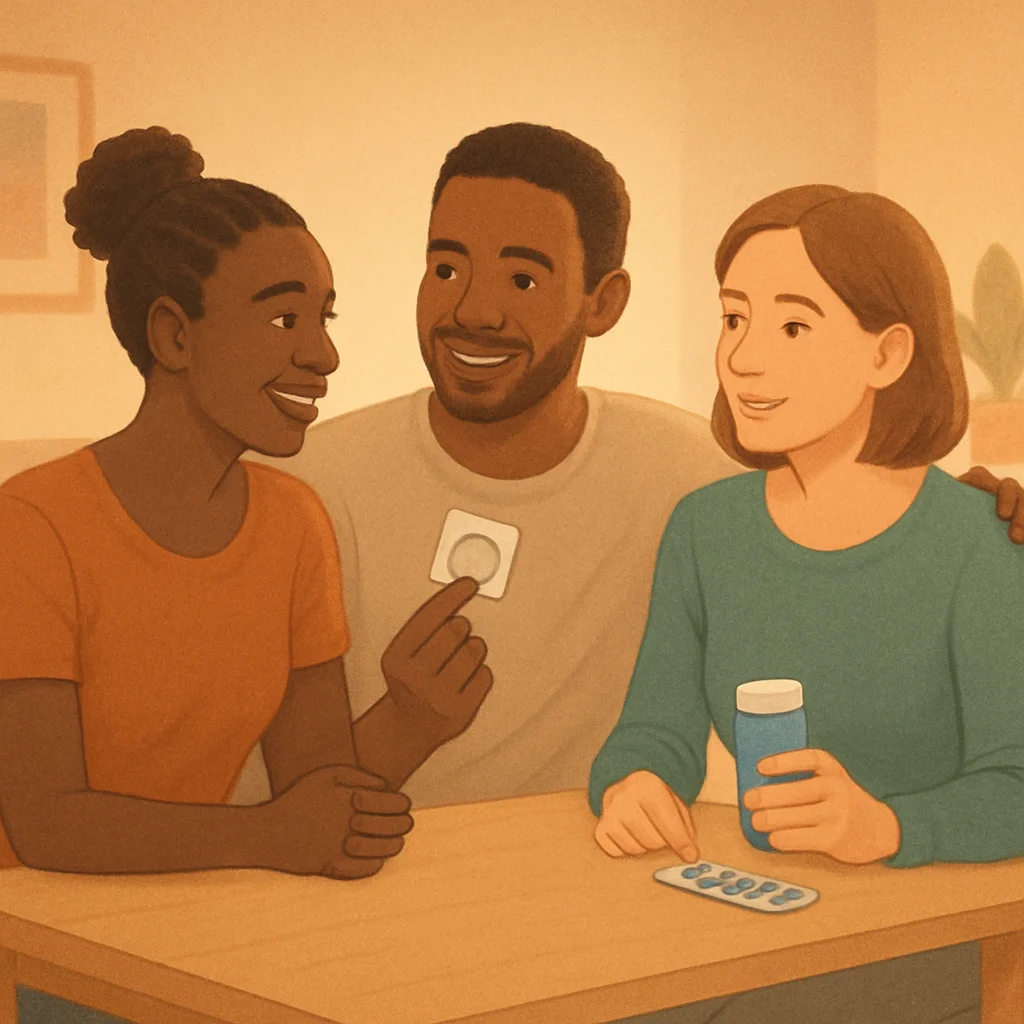
Condoms, Antivirals & PrEP: Layering Protection That Works
You already know one condom won't make intimacy 100% risk-free. But here's what most people don't hear enough: combining two or three prevention strategies at the same time doesn't just add protection — it multiplies it. If you're living with herpes, HIV, or both, understanding how to layer your tools is one of the most practical things you can do before your next intimate encounter.
Why One Method Is Never the Whole Story
Condoms are effective, but they don't cover every surface where herpes virus sheds. According to the CDC, herpes can be transmitted from skin not covered by a condom — the inner thigh, the base of the genitals, the perianal area. That's not a reason to skip condoms; it's a reason not to rely on them alone.
For HIV, the picture is similar. Condoms used correctly and consistently reduce HIV transmission risk by roughly 70–80% in real-world use, not 100%. That gap is where the other layers come in.
If you want to understand the full picture of how asymptomatic shedding and incomplete protection work together, our post on transmission risks and asymptomatic spread breaks it down clearly.
Antiviral Suppression: The Underused Layer
Daily antiviral therapy — acyclovir, valacyclovir, or famciclovir for herpes — does two things at once. It reduces the frequency of outbreaks and it cuts the rate of asymptomatic shedding, which is when the virus is transmissible even though you feel completely fine.
A landmark New England Journal of Medicine study found that daily valacyclovir reduced herpes transmission to susceptible partners by 48% compared to placebo — and that was without also factoring in condom use. When you combine suppressive therapy with consistent condom use, the risk drops considerably further.
That said, suppressive therapy isn't just a favor to your partner. Many people with HSV-2 report fewer outbreaks, less anxiety around intimacy, and a greater sense of control over their own health. Talk to your doctor about whether daily suppression makes sense for your situation — not every person with herpes needs it, but if you're sexually active with a partner who doesn't have HSV, it's worth a real conversation.
"Consistent use of suppressive antiviral therapy, combined with condoms, offers substantially greater protection against herpes transmission than either method used alone." — New England Journal of Medicine, Corey et al., 2004
PrEP: The HIV Prevention Layer That Changed Everything
If you're HIV-negative and sexually active with a partner living with HIV, PrEP (pre-exposure prophylaxis) belongs in the conversation. When taken daily as prescribed, the CDC reports that oral PrEP reduces the risk of getting HIV from sex by about 99%.
There's also a newer option: injectable cabotegravir (CAB-LA), given every two months, which clinical trials showed was even more effective than daily oral PrEP for some populations. If daily pills feel like a barrier, this option is worth asking your provider about.
For people living with HIV who are on antiretroviral therapy (ART) and have an undetectable viral load, the science is equally strong. The U=U (Undetectable = Untransmittable) principle — supported by large studies including the PARTNER2 trial — means that with a sustained undetectable viral load, the sexual transmission risk of HIV to a negative partner is effectively zero. Staying consistent with your ART isn't just about your own health; it's one of the most powerful protection tools that exists.
How to Actually Stack These Layers
Here's what a layered approach looks like in practice, depending on your situation:
If you have HSV and your partner doesn't: Use condoms consistently, take daily suppressive antivirals, and avoid sex during recognized outbreaks or when you feel any prodrome symptoms (tingling, itching). Each layer addresses a different gap.
If you're HIV-positive and undetectable: Maintaining your ART adherence is the primary tool. Adding condoms also protects against other STIs — which matters, because STIs like herpes or syphilis can make someone more vulnerable to HIV if they're exposed to it from another source.
If you're HIV-negative with an HIV-positive partner: PrEP plus condoms gives you overlapping coverage. PrEP handles the viral exposure; condoms reduce other STI risks and provide a backup if adherence slips.
If you're managing both HSV and HIV: You're already likely on antiretrovirals, which also suppress herpes to a degree in some people, though not as effectively as herpes-specific antivirals. Your provider can help you figure out if adding dedicated herpes suppression makes sense on top of your ART regimen.
The Conversation You Need to Have Before the Moment
Layered protection only works if both people in the relationship actually understand what's in place. That means talking to your partner — not in the middle of a heated moment, but beforehand, clearly and specifically.
If you haven't had that conversation yet, or if you're not sure how to bring it up, our guide on when and how to tell someone you have an STI gives you a practical framework for starting it. And if you're working on rebuilding confidence around intimacy generally, what actually works in long-term relationships with an STD is worth reading — it addresses exactly how couples navigate ongoing prevention together.
You don't have to choose between honesty and desire. You just need the right tools and the willingness to use them together.
At MeetPositives, we know that safer intimacy isn't a single checkbox — it's a set of choices you make with your partner based on real information. Whether you're newly diagnosed or years into managing your condition, layering your protection strategies is one of the most concrete things you can do to protect both yourself and the people you care about. You deserve intimacy that feels both connected and informed.
Share This Story, Choose Your Platform!
Kayla Bactung
Comments (0)
Ask A Question
Have A Question, Personal Story, Or Situation You'd Like Help With? Share It Here. The More Context You Include, The More Thoughtful And Useful Our Guidance Can Be.
Our Editorial Team (And Occasional Relationship Contributors) May Choose Selected Submissions To Answer In An Upcoming Blog Post. All Submissions Are Reviewed And Published Anonymously—We Will Never Include Identifying Details.
Important:
If Your Question Is About Your Account, Billing, Upgrades, Reports, Or Technical Issues, Please Contact Customer Care Through The Help Pages So We Can Assist You Faster.
Tips For A Better Answer (Optional):
- Your Age Range + What You're Looking For (Dating, Friendship, Support)
- What You've Tried So Far
- What You're Hoping Happens Next
- Any Boundaries Or Dealbreakers You Want Respected
Responses Shared Here Are For General Information Only And Aren't Medical, Legal, Or Mental-Health Advice.
We Can't Provide Real-Time Or One-On-One Support Through This Form.