
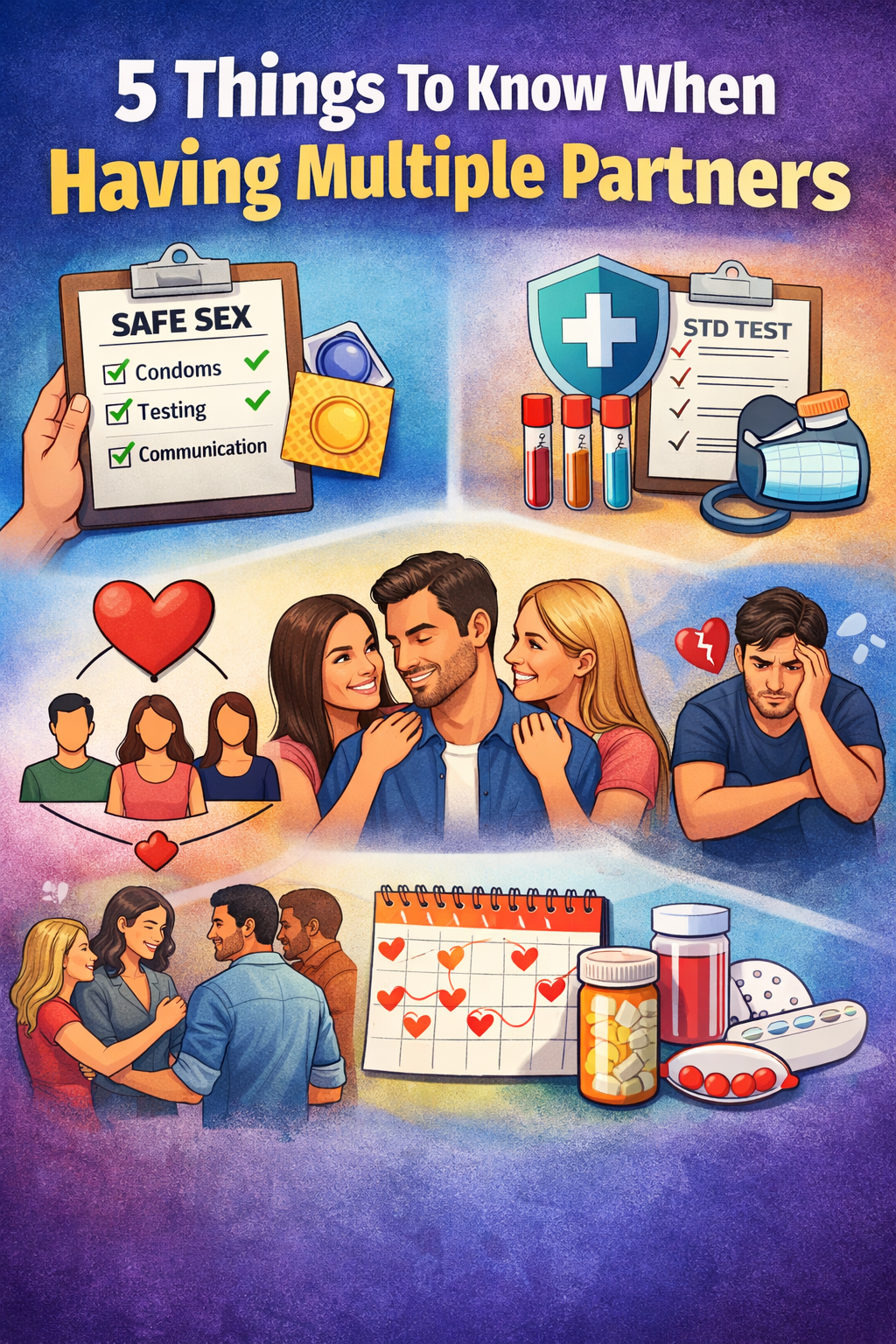
5 Things To Know When Having Multiple Partners
5 Things To Know When Having Multiple Partners
Today's society places significant emphasis on sexuality. As casual sex has become more openly discussed, having multiple sexual partners has become increasingly common. While some people pursue multiple partners for exploration, adventure, or satisfaction, it is important to understand the potential health and emotional risks involved.
Having multiple partners may provide temporary excitement, but it can also increase your exposure to sexually transmitted infections (STIs) and other complications. Below are some important risks to consider.
Herpes
Herpes, including both oral and genital herpes, is caused by the herpes simplex virus (HSV). This sexually transmitted infection can cause painful sores around the mouth or genital area. While treatments can help manage symptoms, there is currently no cure.
Many people with herpes experience few or no symptoms, which means they may unknowingly transmit the virus to others. This is one reason herpes remains one of the most common STIs worldwide.
If you are living with herpes and looking for support, friendship, or relationships, visit our Herpes Dating community.
For additional medical information, visit the CDC Herpes Resource Center.
Chlamydia
Chlamydia is one of the most common sexually transmitted infections worldwide. Typical symptoms include painful urination and unusual discharge, although many people experience no symptoms at all.
Because infections often go unnoticed, individuals may unknowingly pass the infection to their partners. Having multiple sexual partners significantly increases the risk of exposure.
Learn more about symptoms, testing, and prevention from the CDC Chlamydia Information Page.
Hepatitis C
Having multiple sexual partners may increase the risk of Hepatitis C exposure. Hepatitis C is a viral infection that primarily affects the liver and can lead to serious complications including liver damage, cirrhosis, and liver cancer.
Although treatment options have improved significantly, prevention and regular testing remain important. Individuals should discuss risk factors and testing options with healthcare professionals when appropriate.
Additional information can be found through the CDC Hepatitis C Resource Center.
HIV
Human Immunodeficiency Virus (HIV) attacks the body's immune system. Without treatment, HIV can weaken the immune system and make it more difficult for the body to fight infections and diseases.
According to the CDC, having multiple sexual partners can increase the likelihood of HIV exposure, especially when safer sex practices are not consistently used.
If you are living with HIV or interested in learning more about dating with HIV, visit our HIV Dating community.
For current medical information, visit the CDC HIV Resource Center.
Other STI Risks
Additional sexually transmitted infections associated with multiple sexual partners include:
- Gonorrhea
- Syphilis
- Human Papillomavirus (HPV)
- Urinary tract infections
- Pubic lice
- Potential fertility complications
People who are sexually active should consider regular testing and open communication with partners regarding sexual health.
You may also find helpful resources within our STD Dating community and educational resources available on Meet Positives.
Mental and Emotional Considerations
Physical health is not the only consideration when engaging with multiple partners.
Some experts suggest that certain individuals may experience emotional challenges, including relationship difficulties, stress, feelings of isolation, or self-esteem concerns. Experiences vary from person to person, but emotional well-being is an important aspect of overall sexual health.
Maintaining healthy boundaries, communicating openly, and prioritizing emotional wellness can contribute to more positive relationship experiences.
You may also find value in reading relationship and emotional wellness articles in the Mental Health & Stigma section of Meet Positives.
For additional guidance on building healthy relationships and improving communication, explore our Dating Advice articles.
Protecting Yourself and Your Partners
If you choose to become sexually active, it is important to prioritize communication, testing, and safer sex practices.
- Get tested regularly for STIs
- Encourage partners to get tested
- Use protection consistently
- Communicate openly about sexual health
- Stay informed about risks and prevention strategies
For additional dating and safety resources, visit the Meet Positives Safety Center and review the Community Guidelines.
Find Supportive Connections
Whether you are living with an STI or simply looking for a supportive dating environment, Meet Positives helps people build meaningful relationships based on understanding, honesty, and shared experiences.
You can join free, explore our STD Dating community, or browse additional resources designed to help you date safely and confidently.
If you're new to the community, visit the Meet Positives homepage to learn more about available dating, support, safety, and relationship resources.
Share This Story, Choose Your Platform!
Staff Writer
Comments (0)
Ask A Question
Have A Question, Personal Story, Or Situation You'd Like Help With? Share It Here. The More Context You Include, The More Thoughtful And Useful Our Guidance Can Be.
Our Editorial Team (And Occasional Relationship Contributors) May Choose Selected Submissions To Answer In An Upcoming Blog Post. All Submissions Are Reviewed And Published Anonymously—We Will Never Include Identifying Details.
Important:
If Your Question Is About Your Account, Billing, Upgrades, Reports, Or Technical Issues, Please Contact Customer Care Through The Help Pages So We Can Assist You Faster.
Tips For A Better Answer (Optional):
- Your Age Range + What You're Looking For (Dating, Friendship, Support)
- What You've Tried So Far
- What You're Hoping Happens Next
- Any Boundaries Or Dealbreakers You Want Respected
Responses Shared Here Are For General Information Only And Aren't Medical, Legal, Or Mental-Health Advice.
We Can't Provide Real-Time Or One-On-One Support Through This Form.