
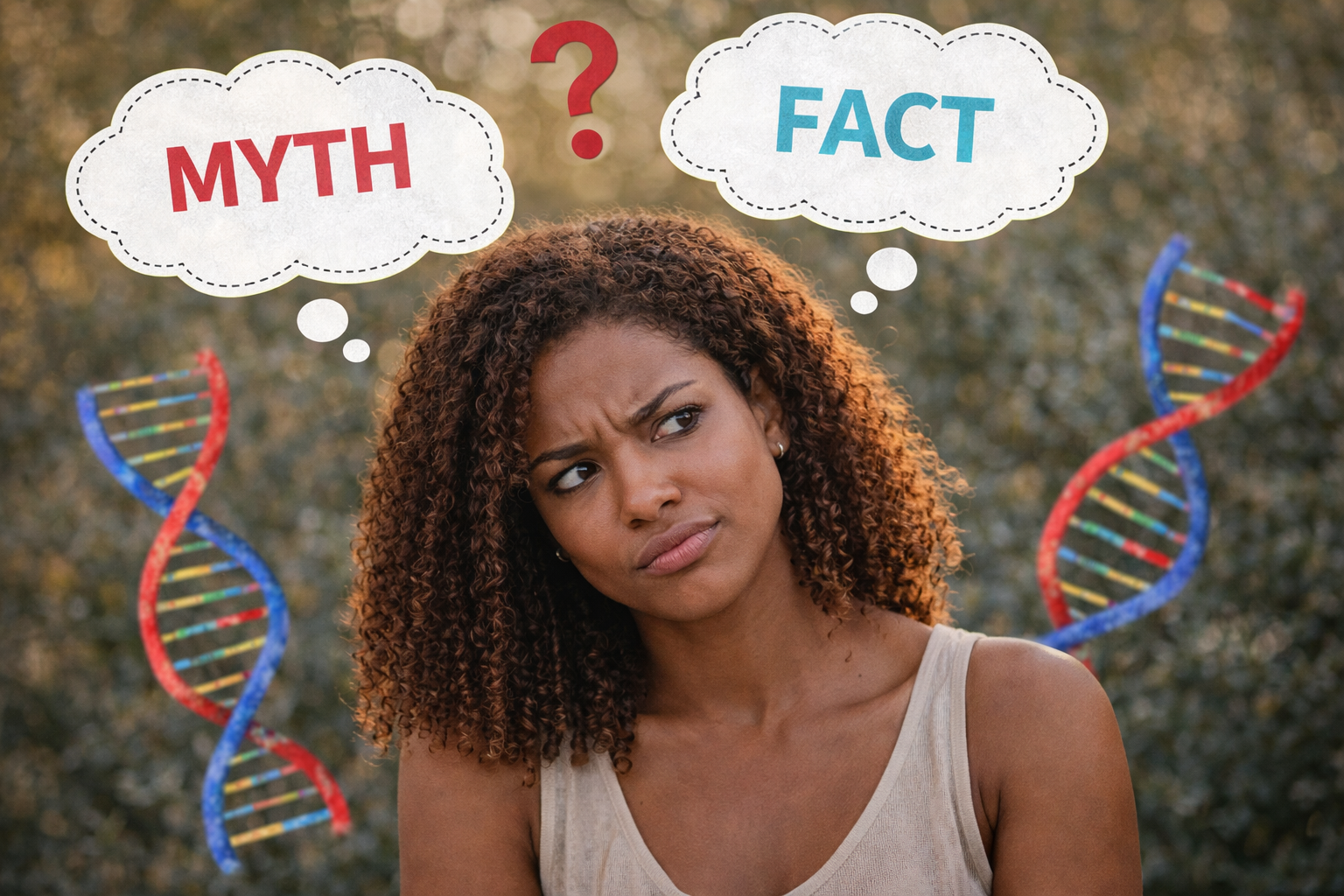
Women Have Male DNA From The Men They Sleep With, Wait, What???
Do Women Retain DNA From Men They Sleep With? Separating Myth from Science
A viral claim has circulated online for years suggesting that women permanently retain DNA from every man they have sex with. While this idea has gained attention through social media posts, blogs, and clickbait articles, the claim is not supported by scientific evidence.
Understanding the facts behind this myth is important because misinformation can create unnecessary fear, confusion, and stigma around sexual health. Instead of focusing on myths, it is far more valuable to understand real sexual health risks and how to protect yourself.
Where Did This Myth Come From?
In 2017, several viral articles claimed that scientific research had proven women permanently absorb and retain male DNA from every sexual partner. These articles referenced an older study from 2012 that identified male cells in the brains of some women during autopsy examinations.
However, the original research did not conclude that these cells came from sexual partners. Instead, researchers believed the cells were likely the result of a biological phenomenon known as microchimerism.
Microchimerism occurs when a small number of cells from one individual remain in another person's body. In many cases, this happens during pregnancy, where fetal cells can remain in a mother's body long after childbirth.
For more information about human genetics and microchimerism, visit the National Institutes of Health (NIH).
Can Sperm Cells Stay in a Woman's Body Forever?
The short answer is no.
Sperm cells are specialized reproductive cells designed for a very specific purpose: fertilization. They are not capable of dividing and reproducing like most human cells.
Sperm typically survive only a limited amount of time within the female reproductive tract. They do not establish permanent colonies within the body, nor do they become integrated into organs and tissues for life.
This is one of the primary reasons scientists reject the claim that women permanently retain DNA from every sexual partner.
Why Might Some Women Have Male Cells in Their Bodies?
Scientists have proposed several explanations for the presence of male cells in women that have nothing to do with sexual activity.
Possible sources include:
- Previous pregnancies involving male fetuses
- Undetected pregnancies that ended in miscarriage
- Cell transfer from an older male sibling through the mother
- Cell exchange between twins before birth
Researchers continue to study microchimerism, but none of the available evidence supports the claim that women retain DNA from sexual partners through intercourse.
Why This Myth Can Be Harmful
Misinformation about sexual health often spreads quickly because it appeals to emotions rather than facts.
Claims like this can:
- Create unnecessary fear and shame
- Increase stigma around sexual activity
- Distract people from legitimate sexual health concerns
- Spread confusion about how the human body actually works
When it comes to sexual health, reliable information from healthcare professionals and reputable organizations is always the best source of guidance.
The Real Concern: STD and STI Risk
Rather than worrying about myths involving DNA transfer, individuals should focus on real sexual health risks, including sexually transmitted diseases (STDs) and sexually transmitted infections (STIs).
According to the Centers for Disease Control and Prevention (CDC), sexually active individuals can reduce their risk through education, testing, communication, and safer sex practices.
Women may face unique risks when it comes to certain STDs and STIs, making awareness and routine testing especially important.
Why Women May Be More Vulnerable to STDs
Female Anatomy
The tissues within the female reproductive system are generally more delicate and may provide bacteria and viruses with easier pathways into the body.
Symptom Confusion
Some STD symptoms can resemble other common conditions. For example, abnormal discharge may sometimes be mistaken for a yeast infection rather than a sexually transmitted infection.
Less Visible Symptoms
Certain STDs, including herpes and syphilis, can produce sores that may be more difficult to detect in women.
Asymptomatic Infections
Infections such as chlamydia and gonorrhea may not produce noticeable symptoms, making routine testing especially important.
Learn more about sexual health and safer intimacy in our Sexual Health & Safer Intimacy articles.
How to Protect Yourself
Taking a proactive approach to sexual health can help reduce the risk of infection and support healthier relationships.
- Discuss STD testing before becoming sexually active with a new partner
- Use condoms and other protective barriers consistently
- Schedule routine STD testing
- Seek medical attention when symptoms appear
- Educate yourself using trusted medical resources
For additional sexual health information, visit the CDC STI Prevention Resource Center.
Building Healthy Relationships Through Honest Communication
Open communication about sexual health is one of the most important parts of any healthy relationship.
Whether you are discussing STD testing, boundaries, protection, or relationship expectations, honest conversations help build trust and reduce misunderstandings.
If you're navigating dating with an STD, explore our resources on:
Final Thoughts
The claim that women permanently retain DNA from every man they have sex with is not supported by scientific evidence. While the presence of male cells in some women has been documented through research, scientists attribute this to biological processes such as microchimerism—not sexual activity.
Instead of focusing on viral myths and misinformation, it is more important to prioritize real sexual health concerns such as STD prevention, routine testing, safer sex practices, and open communication.
Knowledge, education, and accurate information are powerful tools for protecting both your physical and emotional well-being.
Find Supportive Connections
Meet Positives helps people build meaningful relationships in a supportive and understanding environment.
You can join free, explore our STD Dating community, browse educational resources, visit the Safety Center, review our Community Guidelines, or learn more on the Meet Positives homepage.
Note: This article is for informational purposes only and does not replace professional medical advice.
Share This Story, Choose Your Platform!
Current User
Comments (0)
Ask A Question
Have A Question, Personal Story, Or Situation You'd Like Help With? Share It Here. The More Context You Include, The More Thoughtful And Useful Our Guidance Can Be.
Our Editorial Team (And Occasional Relationship Contributors) May Choose Selected Submissions To Answer In An Upcoming Blog Post. All Submissions Are Reviewed And Published Anonymously—We Will Never Include Identifying Details.
Important:
If Your Question Is About Your Account, Billing, Upgrades, Reports, Or Technical Issues, Please Contact Customer Care Through The Help Pages So We Can Assist You Faster.
Tips For A Better Answer (Optional):
- Your Age Range + What You're Looking For (Dating, Friendship, Support)
- What You've Tried So Far
- What You're Hoping Happens Next
- Any Boundaries Or Dealbreakers You Want Respected
Responses Shared Here Are For General Information Only And Aren't Medical, Legal, Or Mental-Health Advice.
We Can't Provide Real-Time Or One-On-One Support Through This Form.