
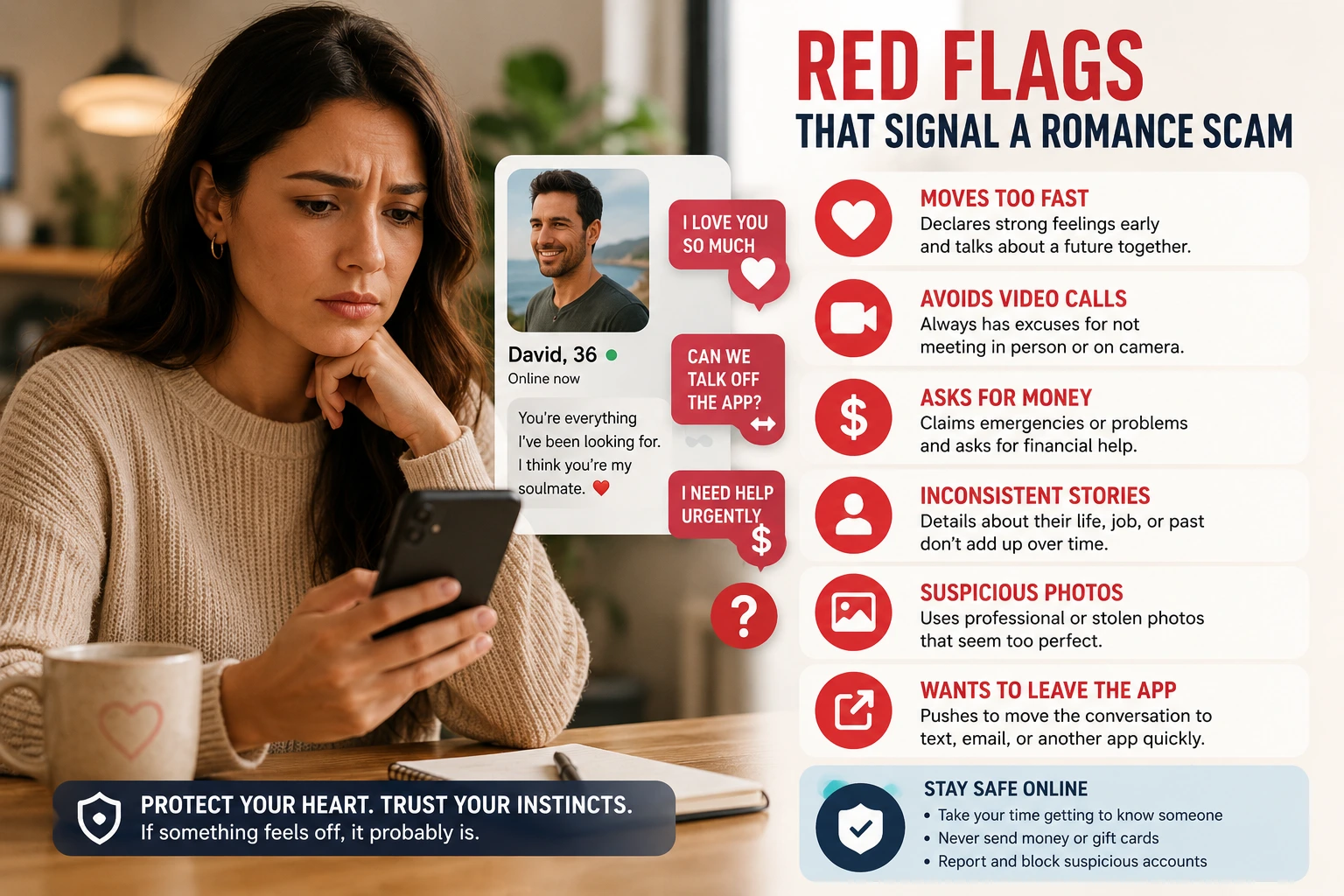
Red Flags That Signal a Romance Scam
Red Flags That Signal a Romance Scam
Online dating can lead to genuine and meaningful relationships, but it can also expose people to romance scams and emotionally manipulative behavior. Knowing the warning signs early may help protect your emotional well-being, personal information, and financial safety.
According to the Federal Trade Commission (FTC) , romance scams continue to cause billions of dollars in reported losses worldwide. Scammers often create fake identities and emotional connections to gain trust before manipulating victims financially or emotionally.
This guide explains common romance scam red flags, how scammers typically operate, and ways to protect yourself while dating online.
What Is a Romance Scam?
A romance scam happens when someone creates a fake online identity or misrepresents themselves to build emotional trust with another person for dishonest purposes.
According to the FBI , scammers often use dating apps, social media platforms, and messaging services to target individuals looking for companionship.
Many romance scams follow a predictable pattern:
- Quick emotional attachment
- Attempts to isolate communication
- Invented emergencies or hardships
- Requests for money or sensitive information
Understanding these patterns can help you identify suspicious behavior before becoming emotionally invested.
Major Red Flags That Signal a Romance Scam
They Move the Relationship Extremely Fast
One of the most common warning signs is intense emotional attachment very early in the conversation.
Scammers may quickly say things like:
- “I've never felt this way before.”
- “You're my soulmate.”
- “I love you” after only a few conversations.
According to the FTC, scammers often try to create emotional dependency quickly before trust can be properly evaluated.
Healthy relationships typically develop over time through shared experiences and consistent communication.
They Avoid Video Calls or Meeting in Person
A person who consistently refuses video calls, voice calls, or in-person meetings may be hiding their identity.
Common excuses may include:
- Working overseas
- Broken camera or phone issues
- Military deployment claims
- Constant travel emergencies
While occasional scheduling conflicts happen, repeated avoidance can be a serious warning sign.
Before becoming emotionally invested, consider requesting a video call to verify the person's identity.
They Ask for Money
According to the FTC , requests for money are one of the clearest indicators of a romance scam.
Scammers may claim they need money for:
- Medical emergencies
- Travel expenses
- Phone bills
- Business problems
- Family crises
- Cryptocurrency investments
They may also ask for:
- Gift cards
- Wire transfers
- Banking information
- Cryptocurrency payments
A legitimate romantic connection should never pressure someone into sending money.
Their Stories Feel Inconsistent
Scammers often struggle to maintain consistent personal details over time.
Watch for contradictions involving:
- Work history
- Location
- Family background
- Relationship status
- Photos and timelines
If details repeatedly change or feel confusing, proceed cautiously.
Their Photos Look Too Perfect
Many scammers use stolen photos from social media accounts, modeling portfolios, or stock image websites.
According to the FBI, romance scammers frequently create attractive fake profiles to build trust more easily.
Signs that profile photos may not be authentic include:
- Professional-quality modeling images
- Very few casual photos
- Photos that appear heavily edited
- Images that seem inconsistent with their story
You can use reverse image search tools to investigate suspicious photos:
For a complete guide, read How to Reverse Image Search a Dating Profile.
They Try to Move Conversations Off the Platform Quickly
Scammers often encourage people to leave dating apps quickly and continue conversations through:
- Private messaging apps
- Text messaging
- Encrypted platforms
Moving off-platform too quickly may reduce the dating platform's ability to monitor suspicious behavior or assist with reporting.
Taking your time and keeping conversations on the platform initially can provide additional protection.
How to Protect Yourself From Romance Scams
Safer online dating habits can help reduce the risk of scams and manipulation.
Helpful safety tips include:
- Take time getting to know someone
- Use video calls before becoming emotionally invested
- Avoid sharing financial information
- Never send money to someone you have not met
- Trust your instincts if something feels wrong
- Keep conversations on the dating platform initially
- Verify suspicious photos using reverse image searches
- Watch for emotional pressure or urgency
Meet Positives provides additional safety resources through:
- Safety Center
- Reporting & Blocking
- Scam & Fraud Prevention
- Reverse Image Search Guide
- How to Spot a Catfish on a Dating Site
What To Do If You Suspect a Romance Scam
If you believe someone may be attempting to scam or manipulate you:
- Stop communication immediately
- Do not send money or sensitive information
- Save screenshots and messages if needed
- Report the account through the platform
- Block the individual
You can also review:
FAQ
Are romance scams common?
Yes. According to the FTC and FBI, romance scams continue to affect thousands of people every year worldwide.
Can scammers use AI-generated photos?
Yes. Some scammers now use AI-generated profile photos that may appear realistic and may not appear in reverse image searches.
Should I send money to someone I met online?
Financial requests from someone you have only met online are considered a major warning sign by consumer protection agencies.
What is catfishing?
Catfishing refers to pretending to be another person online using fake identities, misleading information, or stolen photos.
Can romance scams happen on legitimate dating platforms?
Yes. Even legitimate platforms can occasionally attract fake accounts, which is why safety tools and cautious communication remain important.
Final Thought
Recognizing the red flags that signal a romance scam can help people make safer and more informed dating decisions online.
While most online connections are genuine, staying aware of manipulative behavior, financial pressure, identity inconsistencies, and suspicious communication patterns can reduce emotional and financial risk.
Healthy relationships are built on trust, honesty, communication, and mutual respect—not secrecy, urgency, or pressure.
Join the Meet Positives Community
Meet Positives is committed to creating a safer and more supportive dating environment for everyone.
You can join free, browse our STD Dating community, visit the Safety Center, learn about Scam & Fraud Prevention, explore our Online Dating Protection guides, or learn more on the Meet Positives homepage.
Disclaimer: This article is for educational and safety-awareness purposes only. If you believe you have been targeted by a scam, report the incident to the dating platform and appropriate authorities.
Share This Story, Choose Your Platform!
Current User
Comments (0)
Ask A Question
Have A Question, Personal Story, Or Situation You'd Like Help With? Share It Here. The More Context You Include, The More Thoughtful And Useful Our Guidance Can Be.
Our Editorial Team (And Occasional Relationship Contributors) May Choose Selected Submissions To Answer In An Upcoming Blog Post. All Submissions Are Reviewed And Published Anonymously—We Will Never Include Identifying Details.
Important:
If Your Question Is About Your Account, Billing, Upgrades, Reports, Or Technical Issues, Please Contact Customer Care Through The Help Pages So We Can Assist You Faster.
Tips For A Better Answer (Optional):
- Your Age Range + What You're Looking For (Dating, Friendship, Support)
- What You've Tried So Far
- What You're Hoping Happens Next
- Any Boundaries Or Dealbreakers You Want Respected
Responses Shared Here Are For General Information Only And Aren't Medical, Legal, Or Mental-Health Advice.
We Can't Provide Real-Time Or One-On-One Support Through This Form.