
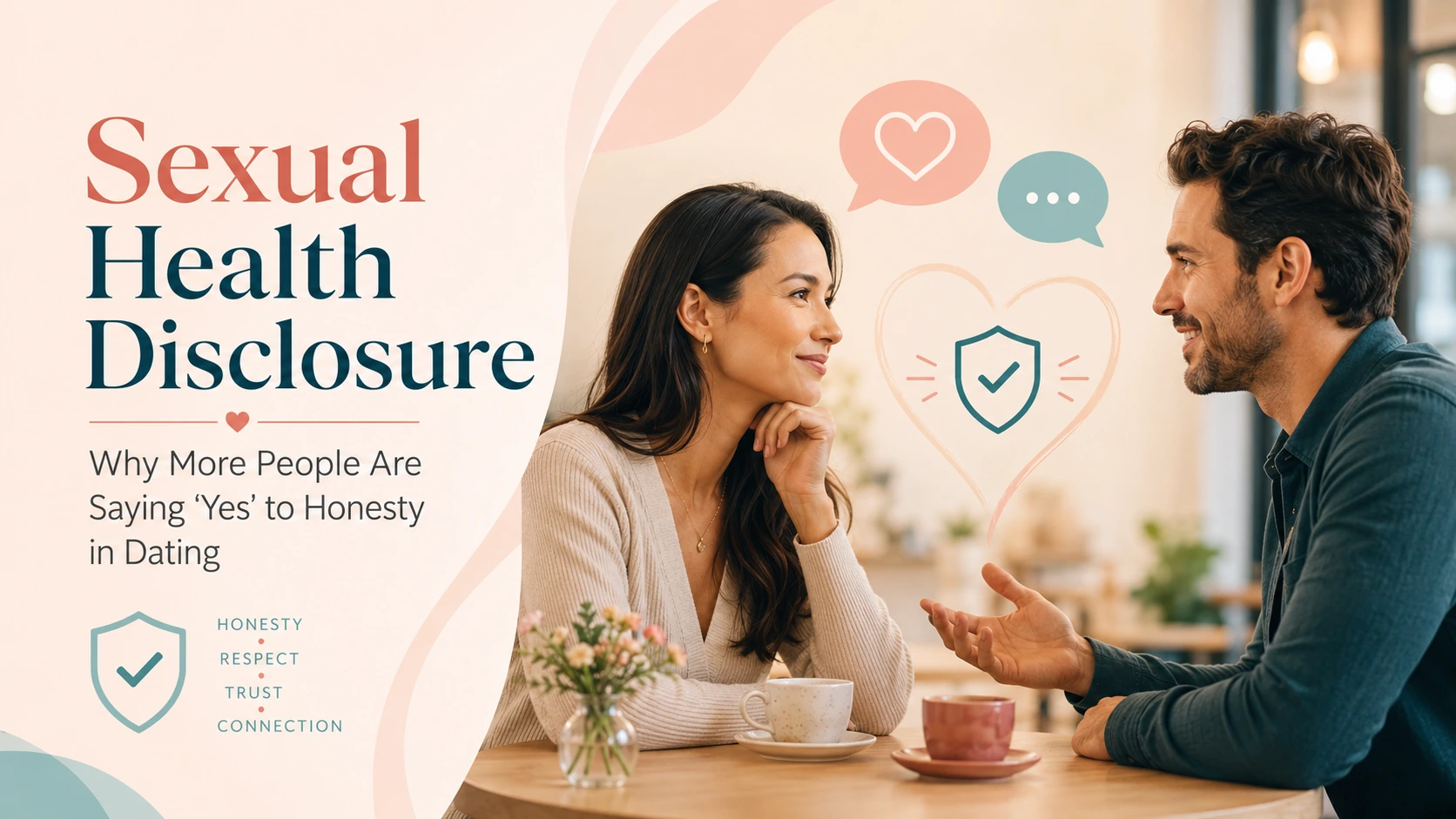
Sexual Health Disclosure: Why More People Are Saying 'Yes' to Honesty in Dating
Sexual Health Disclosure: Why More People Are Saying 'Yes' to Honesty in Dating
Subheading: A cultural shift toward transparency about STI status is reshaping dating norms, strengthening relationships, and dismantling decades of shame—one conversation at a time.
For years, the conversation about STI status in dating was marked by silence, shame, and avoidance. But something is changing. Across dating apps, relationship forums, and intimate conversations worldwide, more people than ever are choosing honesty about their sexual health status—and discovering that transparency, not secrecy, builds stronger, more authentic relationships.
This shift represents a fundamental reckoning with how we approach sexual health, consent, and trust in modern dating. It's a conversation driven by younger generations, amplified by digital communities, and increasingly validated by relationship experts and public health advocates.
The Old Narrative Is Breaking Down
For decades, the stigma surrounding STIs created a culture of silence. People with herpes, HPV, hepatitis, or HIV often felt pressured to hide their status, fearing rejection, judgment, or social ostracism. This secrecy came at a cost: emotional burden, relationship anxiety, and ironically, increased transmission rates due to avoidance of honest conversations about risk and prevention.
But the landscape is shifting. According to recent CDC data on STI statistics, rates of certain infections continue to rise, placing greater emphasis on prevention through communication. A growing body of research shows that disclosure—when done thoughtfully—strengthens relationships, improves communication, and actually reduces the shame that has historically surrounded sexual health conditions.
"We're seeing a generational difference in how people approach sexual health conversations," says Dr. Sarah Chen, a relationship psychologist specializing in sexual health communication. "Younger adults view honesty about sexual health as a basic component of trust-building, similar to financial transparency or past relationship history. It's becoming normalized rather than exceptional."
Why Transparency Is Winning
Three key factors are driving this change:
1. Digital Communities Remove Isolation
Online platforms dedicated to sexual health have created safe spaces where people with STI status can connect, share experiences, and normalize their reality. These communities have shifted the narrative from shame to community, from isolation to belonging. When people realize they're not alone—that millions share similar experiences—disclosure becomes less terrifying and more manageable.
2. Gen Z Reframes Health as Neutral
Younger generations treat sexual health conditions with the same matter-of-factness they apply to managing diabetes or allergies. It's a health status, not a character flaw. This pragmatic approach is gradually reshaping social attitudes, making disclosure feel less like a confession and more like basic health information sharing. Resources from Planned Parenthood on sexual health reflect this modern, destigmatized approach.
3. Research Shows Honesty Deepens Intimacy
Studies on relationship satisfaction consistently show that couples who communicate openly about sexual health—including status, testing, and prevention—report higher levels of trust and intimacy. Peer-reviewed research on disclosure and relationships demonstrates that vulnerability, when reciprocated with acceptance, creates deeper bonds. Disclosure becomes an opportunity to deepen connection rather than a liability.
The Practical Side: Why People Are Choosing Honesty
Beyond the emotional and psychological benefits, people are discovering practical reasons to disclose:
Peace of Mind: The anxiety of hiding a secret is exhausting. Disclosure removes that burden. Many people report feeling liberated after their first honest conversation.
Authentic Connection: When you're hiding something fundamental about yourself, genuine intimacy is impossible. Disclosure allows real connection to begin. This is why our community members report deeper relationships after being transparent.
Better Prevention Conversations: Honesty enables couples to make informed decisions about protection, testing, and risk management. This is how transmission actually decreases—through communication, not avoidance. The World Health Organization's sexual health resources emphasize communication as a prevention tool.
Filtering for Compatibility: Disclosure early in dating filters for partners with mature attitudes about health. Those who accept you move forward; those who don't reveal incompatibility before you've invested emotionally. Our dating advice section covers strategies for this conversation.
The Challenges Remain Real
This cultural shift is real, but stigma hasn't disappeared. Many people still fear rejection, judgment, or being passed over on dating apps. The reality is that some potential partners will react negatively—and that's valuable information, not a reflection of worth.
"Disclosure is brave precisely because there is still risk," Dr. Chen notes. "But more people are finding that the risk is worth taking. The alternative—hiding and living with that anxiety—is the heavier burden."
Public health policy is beginning to catch up too. As conversations become more open, healthcare providers are increasingly training in sexual health communication. Dating apps are evolving their features to support safer conversations. And media representation is finally moving beyond the shame-based narratives that have dominated for so long.
What This Means for Modern Dating
The normalization of sexual health disclosure isn't just changing how individuals date—it's fundamentally reshaping what we expect from intimate relationships. Honesty about health status is becoming a baseline expectation, like transparency about relationship history or mental health challenges.
This shift benefits everyone: it reduces transmission through better communication, decreases the psychological burden of shame, strengthens relationships through authentic communication, and creates a world where having an STI doesn't define your worth or limit your ability to build meaningful connections.
For people navigating dating with an STI status, the message is increasingly clear: You deserve a partner who accepts you fully. The conversation is getting easier. And you're far from alone.
Moving Forward
The cultural moment around sexual health disclosure is a watershed moment. For the first time in modern history, being honest about STI status is becoming not just socially acceptable, but socially expected—a sign of maturity, respect, and a commitment to authentic relationships.
If you're considering disclosure or navigating sexual health in your dating life, know this: the conversation is changing. More people are saying yes to honesty. And that changes everything.
Share This Story, Choose Your Platform!
Kayla Bactung
Comments (0)
Ask A Question
Have A Question, Personal Story, Or Situation You'd Like Help With? Share It Here. The More Context You Include, The More Thoughtful And Useful Our Guidance Can Be.
Our Editorial Team (And Occasional Relationship Contributors) May Choose Selected Submissions To Answer In An Upcoming Blog Post. All Submissions Are Reviewed And Published Anonymously—We Will Never Include Identifying Details.
Important:
If Your Question Is About Your Account, Billing, Upgrades, Reports, Or Technical Issues, Please Contact Customer Care Through The Help Pages So We Can Assist You Faster.
Tips For A Better Answer (Optional):
- Your Age Range + What You're Looking For (Dating, Friendship, Support)
- What You've Tried So Far
- What You're Hoping Happens Next
- Any Boundaries Or Dealbreakers You Want Respected
Responses Shared Here Are For General Information Only And Aren't Medical, Legal, Or Mental-Health Advice.
We Can't Provide Real-Time Or One-On-One Support Through This Form.