
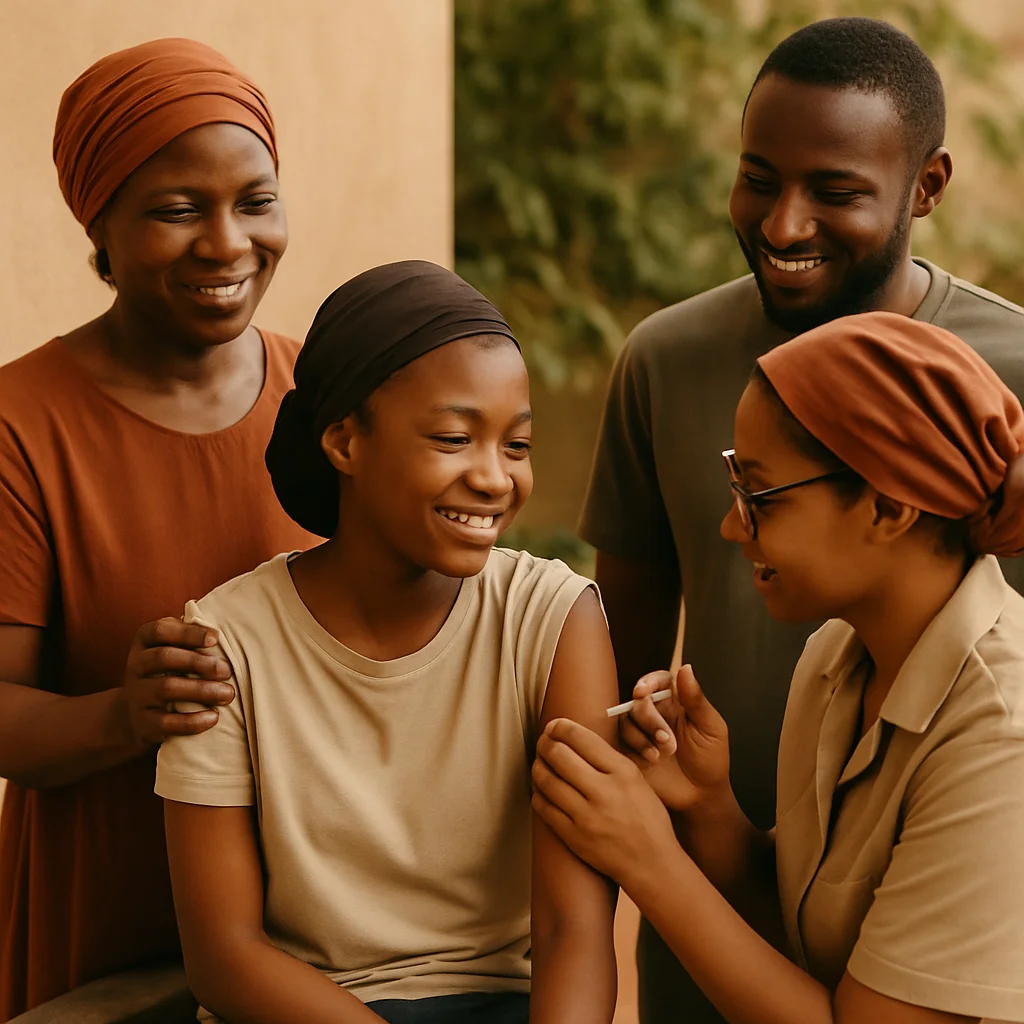
Nigeria Just Vaccinated 26,000 Girls Against HPV
Cervical cancer kills more than 300,000 women every year worldwide — and nearly 90% of those deaths happen in low- and middle-income countries. Nigeria just took a direct swing at that statistic. A targeted HPV vaccination campaign reached 26,000 girls across the country, with health stakeholders calling it a concrete step toward eliminating one of the most preventable cancers on the planet.
What Actually Happened
According to The Guardian Nigeria, the campaign mobilized public health officials, community leaders, and school systems to administer the HPV vaccine to girls — the demographic most at risk for developing cervical cancer decades down the line. Stakeholders emphasized that catching girls before sexual debut is when the vaccine does its best work.
Nigeria carries one of the heaviest cervical cancer burdens in sub-Saharan Africa. The World Health Organization estimates that Nigeria records over 14,000 new cervical cancer cases annually, with more than 8,000 deaths — numbers that dwarf those of wealthier nations with established immunization infrastructure.
Why 26,000 Is Both a Win and a Wake-Up Call
Let's be honest: 26,000 girls vaccinated sounds impressive until you remember that Nigeria has a population of over 220 million. The country needs to reach millions of girls to bend the cancer curve in any meaningful direction.
That doesn't diminish this campaign. It signals that the infrastructure is moving, that local governments and health advocates are buying in, and that scale is possible. But it also means the work is just beginning.
The CDC's global cervical cancer data shows that countries with high HPV vaccination coverage — like Scotland, Australia, and Sweden — have seen near-elimination of HPV-related cervical disease in vaccinated cohorts. That outcome doesn't happen by accident. It takes years of sustained investment and political will.
"The HPV vaccine is one of the most powerful cancer prevention tools we have. Reaching girls before exposure to the virus is where the real protection lies. Every campaign that expands coverage is a life saved, often 20 or 30 years from now." — Paraphrased from global reproductive health advocates at the Nigeria campaign launch, as reported by The Guardian Nigeria
The Science Behind the Vaccine Hasn't Changed — It's Still That Good
HPV causes virtually all cervical cancers. The vaccine — whether Gardasil 9, Cervarix, or another approved formulation — protects against the high-risk strains responsible for the bulk of cases. We've covered the data on this extensively: the evidence that HPV vaccination nearly eliminates cervical cancer deaths in vaccinated populations keeps piling up.
Two doses before age 15 give the same immune response as three doses given later. That's the sweet spot public health campaigns like Nigeria's are aiming for — catch girls young, before first sexual contact, and the protection sticks.
It's also worth remembering that HPV doesn't only cause cervical cancer. It drives cancers of the throat, anus, penis, vulva, and vagina. If you've read our breakdown of how the HPV vaccine cuts cancer risk in men by 50%, you know this is not just a women's health issue.
What This Means If You're Already Living with HPV
If you're part of the MeetPositives community and you're living with HPV, this story hits differently. You understand — probably better than most — how quietly this virus moves through populations, how little warning it gives, and how much stigma gets attached to a diagnosis that is, statistically speaking, nearly universal in sexually active adults.
You can't undo a past infection with a vaccine. But campaigns like this one in Nigeria mean that future generations may never face the diagnosis conversation you've had to have. That matters. Prevention at population scale is how we get from where we are now to somewhere better.
If you're uncertain about your own HPV status, your partners' risk, or how to talk about this — our guide on the data behind HPV vaccination and cervical cancer deaths is a strong place to start.
The Bigger Pattern Worth Watching
Nigeria's campaign doesn't exist in isolation. The WHO's global strategy aims to vaccinate 90% of girls against HPV by age 15, screen 70% of women by age 35 and 45, and treat 90% of women with detected disease — all by 2030. That's an ambitious target, and the gap between ambition and reality in low-resource settings is real.
But momentum is real too. Gavi, the Vaccine Alliance, has supported HPV vaccine rollouts across dozens of countries. Prices have dropped. Supply chains have improved. And national campaigns like this one in Nigeria demonstrate that local health systems can execute.
Every girl vaccinated today is a potential cancer diagnosis that never happens in 2045. That's the timeline we're talking about — long, slow, and absolutely worth tracking.
For our community: prevention stories like this one remind us that the science around sexually transmitted infections keeps moving forward. Whether you're living with HPV, HSV, HIV, or hepatitis, you deserve accurate information without shame attached to it. This is what public health doing its job looks like — imperfect, incremental, and still worth celebrating.
Share This Story, Choose Your Platform!
Kayla Bactung
Comments (0)
Ask A Question
Have A Question, Personal Story, Or Situation You'd Like Help With? Share It Here. The More Context You Include, The More Thoughtful And Useful Our Guidance Can Be.
Our Editorial Team (And Occasional Relationship Contributors) May Choose Selected Submissions To Answer In An Upcoming Blog Post. All Submissions Are Reviewed And Published Anonymously—We Will Never Include Identifying Details.
Important:
If Your Question Is About Your Account, Billing, Upgrades, Reports, Or Technical Issues, Please Contact Customer Care Through The Help Pages So We Can Assist You Faster.
Tips For A Better Answer (Optional):
- Your Age Range + What You're Looking For (Dating, Friendship, Support)
- What You've Tried So Far
- What You're Hoping Happens Next
- Any Boundaries Or Dealbreakers You Want Respected
Responses Shared Here Are For General Information Only And Aren't Medical, Legal, Or Mental-Health Advice.
We Can't Provide Real-Time Or One-On-One Support Through This Form.