
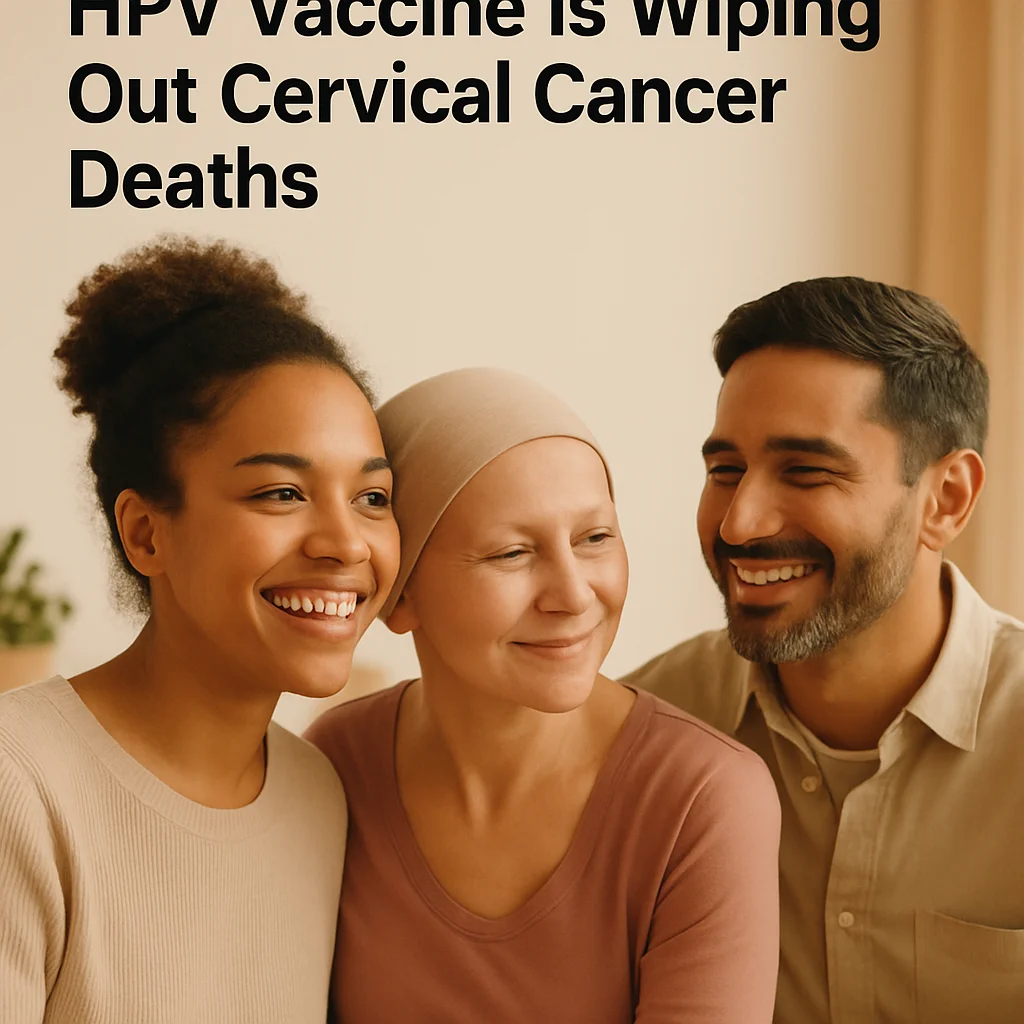
HPV Vaccine Is Wiping Out Cervical Cancer Deaths
Cervical cancer used to be one of the leading cancer killers of women worldwide. Now, in countries with strong HPV vaccination programs, it is becoming genuinely rare. New data reported by New Scientist confirms what researchers have been tracking for years: the HPV vaccine doesn't just prevent infection — it prevents death.
What the Data Actually Shows
The evidence is striking. Women who received the HPV vaccine as adolescents show dramatically lower rates of cervical cancer than unvaccinated cohorts — and in some age groups, the drop in mortality is close to total.
A landmark study published in The New England Journal of Medicine found that among women vaccinated before age 17, the rate of cervical cancer dropped by nearly 90 percent compared to unvaccinated women. The earlier the vaccine, the stronger the protection.
The CDC reports that HPV causes roughly 36,000 cancers in the United States every year — cervical cancer being the most well-documented, but also cancers of the throat, anus, penis, vagina, and vulva. The vaccine targets the strains responsible for the majority of those cases.
Why This Matters More Than a Headline
Here's what gets lost in the celebration: HPV is the most common sexually transmitted infection in the world. Most sexually active adults will get it at some point. Many people in our community are already living with HPV — often without knowing it, since most strains clear on their own without symptoms.
But high-risk strains — particularly HPV 16 and 18 — don't always clear. They can linger and, over years, trigger cellular changes that become cancer. That's the slow, quiet danger the vaccine was designed to stop.
The fact that we are now watching cervical cancer deaths fall in real populations — not just in lab models or short-term trials — means the vaccine works exactly as promised. That is not a minor thing.
"The HPV vaccine is one of the most effective cancer prevention tools we have ever developed. We are essentially watching a cancer disappear in real time in vaccinated cohorts." — Dr. Silvia de Sanjosé, epidemiologist and HPV researcher affiliated with the Barcelona Institute for Global Health
Who Should Still Get Vaccinated — and Who Can't
The vaccine works best before exposure to HPV, which is why it's recommended for preteens. But the World Health Organization supports vaccination up to age 26 for everyone, and up to age 45 for adults who discuss it with their doctor.
If you already have HPV, the vaccine may still protect you against strains you haven't yet been exposed to. It won't treat an existing infection — but it can reduce the risk of future ones.
If you're living with HIV, pay close attention here. People with HIV are at significantly higher risk for HPV-related cancers because immune suppression makes it harder for the body to clear high-risk strains. The vaccine is especially recommended for this group, and your doctor may suggest a three-dose series instead of the standard two.
The Screening Gap Nobody Talks About
The vaccine is only part of the equation. Pap smears and HPV co-testing remain essential — especially for people who were not vaccinated, or who were vaccinated later in life after potential exposure.
Screening catches pre-cancerous changes before they become cancer. When vaccination and screening work together, the protection is extraordinary. When either one drops — due to cost, access, stigma, or mistrust — that's when people die from a preventable disease.
For our community specifically, stigma around sexual health can make people avoid gynecological visits or hesitate to ask their doctor about the HPV vaccine. That hesitation has real consequences. We cover the data on how dramatically the vaccine cuts cervical cancer risk — the numbers should remove any remaining doubt.
What This Means for the MeetPositives Community
If you're living with HPV, this news is personal. It's proof that the medical community built something that works — and that science, when it gets traction, can genuinely bend the mortality curve.
If you have kids, nieces, nephews, or younger people in your life, this data makes the case for early vaccination as clearly as anything published in the last decade. Check out our breakdown of how the HPV vaccine cuts cancer risk in men by 50% — because this isn't just a conversation for people with cervixes.
And if you haven't been vaccinated and you're under 45, talk to your doctor this week. Not next month. This week.
We tend to think of HPV as manageable background noise — common, usually harmless, rarely discussed. But for too many people, it has been a death sentence that arrived decades after the infection, silent and slow. That is changing. And you deserve to know it's changing because of a shot that has existed for nearly 20 years, that is safe, that is effective, and that should have reached more people sooner.
The work isn't done. But the direction is clear. You can read more about the broader picture of STI statistics in 2026 and what the numbers mean for people navigating sexual health today.
Share This Story, Choose Your Platform!
Kayla Bactung
Comments (0)
Ask A Question
Have A Question, Personal Story, Or Situation You'd Like Help With? Share It Here. The More Context You Include, The More Thoughtful And Useful Our Guidance Can Be.
Our Editorial Team (And Occasional Relationship Contributors) May Choose Selected Submissions To Answer In An Upcoming Blog Post. All Submissions Are Reviewed And Published Anonymously—We Will Never Include Identifying Details.
Important:
If Your Question Is About Your Account, Billing, Upgrades, Reports, Or Technical Issues, Please Contact Customer Care Through The Help Pages So We Can Assist You Faster.
Tips For A Better Answer (Optional):
- Your Age Range + What You're Looking For (Dating, Friendship, Support)
- What You've Tried So Far
- What You're Hoping Happens Next
- Any Boundaries Or Dealbreakers You Want Respected
Responses Shared Here Are For General Information Only And Aren't Medical, Legal, Or Mental-Health Advice.
We Can't Provide Real-Time Or One-On-One Support Through This Form.