
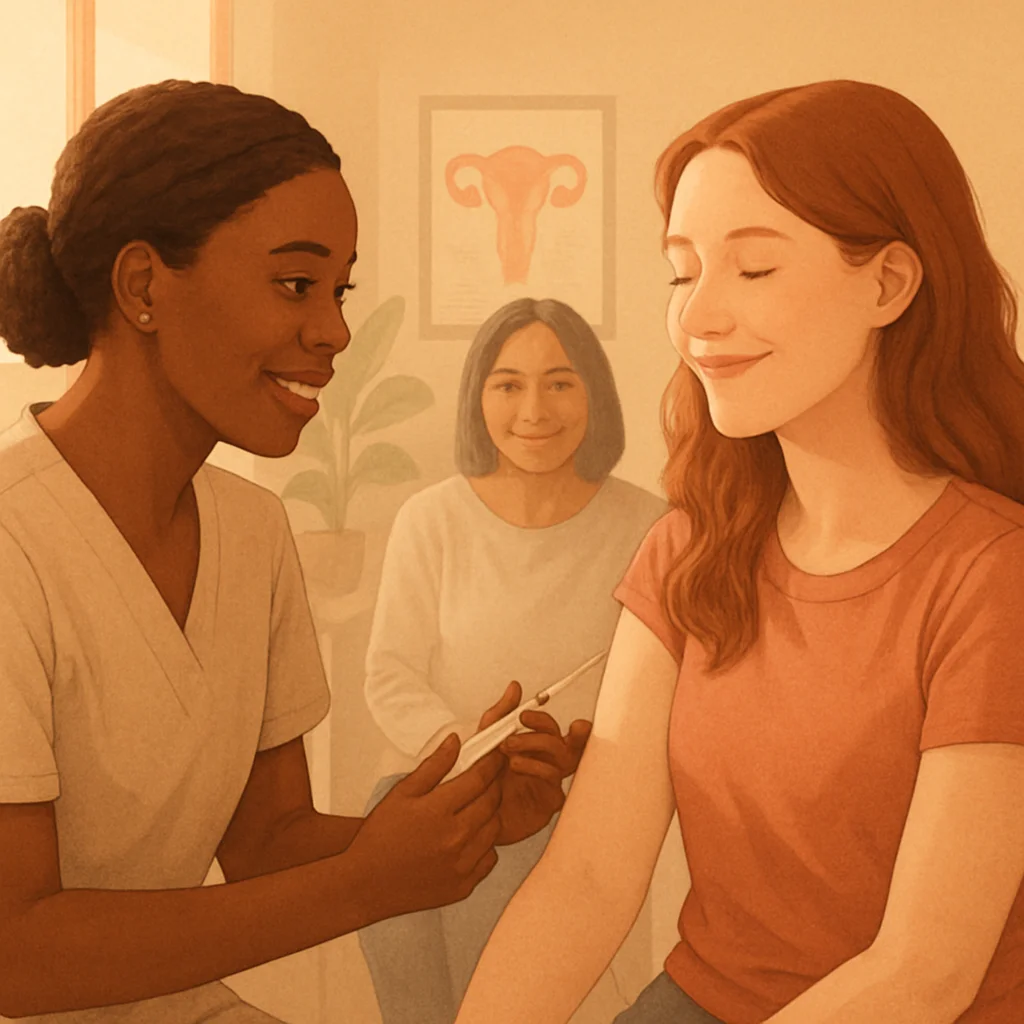
HPV Vaccine Cuts Cervical Cancer Risk to Near Zero
A Landmark Moment in the Fight Against HPV-Related Cancer
For anyone living with HPV — or loving someone who does — this week's news carries a powerful message of hope. According to a major study widely reported by the BBC, young women who received the HPV vaccine now have a risk of dying from cervical cancer that is described as close to zero. Let that sink in for a moment. A sexually transmitted infection that once quietly contributed to tens of thousands of cancer deaths each year is now being stopped in its tracks by a single preventive tool.
At MeetPositives, we believe that knowledge is empowerment — especially for those of us navigating life with an STI diagnosis. So let's break down what this research means, who it affects, and what practical steps you can take right now.
What the Research Actually Found
The study, which followed vaccinated women in the United Kingdom over more than a decade, found a dramatic and sustained reduction in both HPV infection rates and cervical cancer incidence among those who received the vaccine before age 17. The results were so significant that researchers used the phrase "close to zero" to describe the remaining mortality risk — language scientists rarely use lightly.
This aligns with what global health organizations have long predicted. According to the CDC, HPV vaccines can prevent more than 90% of HPV-attributable cancers when administered at the recommended ages. The real-world data is now confirming what clinical trials promised.
Cervical cancer is caused almost entirely by persistent infection with high-risk strains of HPV — particularly HPV-16 and HPV-18. These two strains alone are responsible for roughly 70% of all cervical cancer cases worldwide, as noted by the World Health Organization. The vaccine directly targets these strains, and the results speak for themselves.
HPV Is More Common Than You Might Think
One of the most important things to understand about HPV is just how widespread it is. It is the most common sexually transmitted infection in the world. Most sexually active adults will contract at least one strain of HPV in their lifetime — many without ever knowing it, because the infection often has no symptoms and clears on its own.
But some strains persist. And persistent high-risk HPV can, over many years, lead to cellular changes that develop into cancer — not just cervical cancer, but also cancers of the throat, anus, penis, vagina, and vulva. This is why the HPV conversation matters for everyone, not just women.
If you're part of the MeetPositives community and living with an HPV diagnosis, you are far from alone — and a diagnosis does not define your future. Living with HPV looks different for everyone, and with the right information and support, you can make empowered decisions about your health.
What About People Already Living with HPV?
Here's a question we hear often: If I already have HPV, is the vaccine still worth getting? The answer, according to most health guidelines, is nuanced but often still yes. The vaccine protects against strains you haven't yet been exposed to, and most people are not infected with every HPV strain simultaneously.
More importantly, this news is a reminder to prioritize regular screenings. For those with HPV, especially high-risk strains, routine Pap smears and HPV tests remain essential. Catching cellular changes early — before they progress to cancer — is one of the most powerful tools available. Research published via PubMed continues to reinforce that combined vaccination and screening strategies offer the most comprehensive protection.
Talk openly with your healthcare provider about your specific strains, your screening schedule, and whether any additional doses of the vaccine make sense for your situation. There is no shame in asking questions — only strength.
Why This Matters for the Broader STI Community
The HPV vaccine success story is not just a medical milestone — it's a cultural one. It proves that stigma-free, science-backed public health strategies work. When people have access to accurate information and healthcare without shame, lives are saved. Full stop.
For the broader community living with STIs — whether that's herpes (HSV-1 or HSV-2), HIV, hepatitis, or HPV — this moment is a reminder that research is always moving forward. Treatments improve. Vaccines are developed. The story of living with an STI is not a static one. It evolves, and more often than not these days, it evolves toward better outcomes.
Understanding how to navigate dating and relationships with HPV is part of living fully and honestly — and the science increasingly supports that a positive diagnosis doesn't have to limit your life or your love.
Practical Takeaways for MeetPositives Members
- If you haven't been vaccinated: The HPV vaccine is approved for adults up to age 45 in many countries. Ask your doctor if it's right for you — it's never too late to discuss your options.
- If you're already HPV-positive: Stay consistent with your screening schedule. Early detection of cellular changes is life-saving.
- If you're a parent: The vaccine is most effective when given before sexual debut. The research now proves — definitively — that it works.
- If you're dating with HPV: Open, honest conversations with partners are always the right move. Knowledge shared is stigma reduced.
- Stay informed: Health news like this matters. Follow trusted sources and communities (like this one) that deliver science without shame.
An Empowering Conclusion
"Close to zero" is more than a statistic. For the millions of women and families who have been touched by cervical cancer, it is a phrase that represents decades of research, advocacy, and quiet courage. It is proof that science, compassion, and community — working together — can change the world.
At MeetPositives, we celebrate this milestone not just as a public health victory, but as a reminder of something we believe deeply: your diagnosis is not your destiny. Whether you're living with HPV, herpes, HIV, or hepatitis, you deserve accurate information, a supportive community, and a future filled with possibility.
Here's to the science that protects us — and to each other.
Share This Story, Choose Your Platform!
Kayla Bactung
Comments (0)
Ask A Question
Have A Question, Personal Story, Or Situation You'd Like Help With? Share It Here. The More Context You Include, The More Thoughtful And Useful Our Guidance Can Be.
Our Editorial Team (And Occasional Relationship Contributors) May Choose Selected Submissions To Answer In An Upcoming Blog Post. All Submissions Are Reviewed And Published Anonymously—We Will Never Include Identifying Details.
Important:
If Your Question Is About Your Account, Billing, Upgrades, Reports, Or Technical Issues, Please Contact Customer Care Through The Help Pages So We Can Assist You Faster.
Tips For A Better Answer (Optional):
- Your Age Range + What You're Looking For (Dating, Friendship, Support)
- What You've Tried So Far
- What You're Hoping Happens Next
- Any Boundaries Or Dealbreakers You Want Respected
Responses Shared Here Are For General Information Only And Aren't Medical, Legal, Or Mental-Health Advice.
We Can't Provide Real-Time Or One-On-One Support Through This Form.