
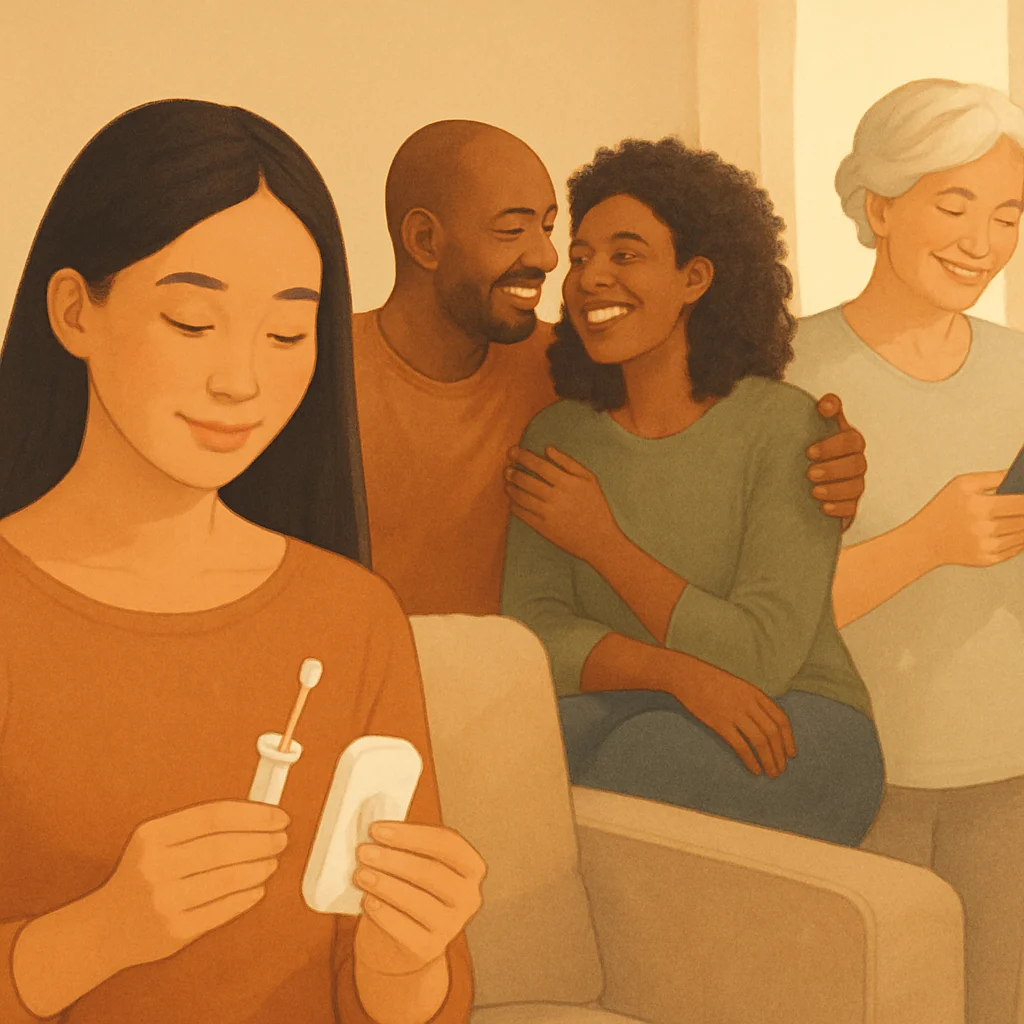
You Can Now Screen for HPV at Home. So Why Aren't More People Doing It?
About 13,000 people in the United States receive a cervical cancer diagnosis every year — and most of those cancers trace back to HPV strains that a simple screening could catch early. Now there's a way to do that screening without setting foot in a clinic. The problem? Most people who need it most have never heard of it.
What the Study Actually Found
Research published through CIDRAP highlights a growing body of evidence that self-collected vaginal samples for HPV cervical screening are clinically accurate and acceptable to patients. In plain terms: you swab yourself at home, mail the sample, and get results — no stirrups, no speculum, no waiting room.
The catch is uptake. While patients who knew about self-collection were generally willing to try it, awareness remained low across the board. Researchers pointed directly at outreach failures — not patient reluctance — as the main barrier.
That distinction matters. When low screening rates get framed as patient apathy, healthcare systems avoid accountability. This study pushes back on that narrative hard.
Who Gets Left Behind When Outreach Fails
The people most likely to skip routine cervical screening aren't avoiding it out of carelessness. They're often dealing with real structural barriers — no insurance, no flexible work schedule, no provider nearby, or a history of medical encounters that felt dehumanizing.
For people living with HPV, that last one hits differently. Shame and stigma already make it harder to engage with the healthcare system. A clinical environment where you feel judged doesn't exactly motivate follow-up appointments.
At-home screening sidesteps a lot of that friction. But only if you know it exists — and only if someone trusted tells you it's a legitimate option, not a shortcut.
"Self-collection offers an opportunity to reach people who have been chronically underscreened — but the technology alone isn't enough. We need active, targeted outreach to make this work for the populations who need it most."
That kind of proactive communication requires healthcare systems to actually invest in it — something the study's authors flagged as an urgent, unfinished task.
The Science Behind Self-Collection Is Solid
If you're wondering whether a home-collected sample is as reliable as one taken by a clinician, the short answer is: yes, largely. Multiple studies have confirmed that self-collected samples detect high-risk HPV strains with accuracy that rivals provider-collected specimens.
The clinical evidence on HPV self-sampling has been building for over a decade. The World Health Organization and several national health bodies outside the U.S. have already integrated it into their standard screening programs. The U.S. is catching up — slowly.
In 2024, the FDA cleared the first at-home HPV self-collection option for use with certain lab-based tests. That cleared a regulatory hurdle, but it didn't automatically translate into widespread awareness or access.
What This Means If You Have HPV
If you're already living with HPV, you know screening isn't a one-time event. High-risk strains — particularly HPV 16 and 18 — require ongoing monitoring because persistent infection drives cervical cell changes that, left unchecked, can progress to cancer.
At-home screening doesn't replace colposcopy or the follow-up care you need after an abnormal result. But it lowers the barrier to that first, critical data point: knowing whether high-risk HPV is currently active.
We've covered how the HPV vaccine has nearly eliminated cervical cancer deaths in vaccinated populations. Screening is the other half of that equation — the safety net for everyone the vaccine didn't reach in time, or whose strain wasn't fully covered.
And if you've been tracking the rise of at-home STD testing as a trend, this fits into a larger shift: people are demanding health tools that work on their terms, in their own space, without having to justify themselves to a stranger in a white coat.
The Outreach Gap Is a Solvable Problem
Here's what frustrates public health advocates about this moment: the technology works, patients are willing to use it, and the evidence supports it. The only thing missing is telling people it exists.
That's not a complex scientific problem. It's a communication and funding problem — and those are theoretically fixable.
The study's authors called for targeted outreach to underscreened populations, which includes people in rural areas, low-income communities, those without consistent healthcare access, and people who face stigma around sexual health — a category that describes a lot of us here.
The WHO's global strategy to eliminate cervical cancer sets a target of 70% of women screened by age 35 and again by age 45. In the U.S., we're nowhere near that in underserved communities. At-home options could close that gap — if the outreach actually happens.
What You Can Do Right Now
Ask your provider whether HPV self-collection is available through your lab network. If they haven't brought it up, bring it up yourself. Some telehealth platforms and specialty labs now offer home collection kits — your insurance may cover it, and if not, some programs offer them at low or no cost.
If you're supporting someone who's been avoiding screening — a friend, a partner, someone in your life who's dealt with the same stigma and shame many of us have — share this. Sometimes the barrier really is just not knowing an easier option exists.
At MeetPositives, we've always believed that access to care starts with access to information. You deserve tools that meet you where you are — not where the system finds it convenient to put you. At-home HPV screening is one of those tools. Now we just need the world to know it exists.
Share This Story, Choose Your Platform!
Kayla Bactung
Comments (0)
Ask A Question
Have A Question, Personal Story, Or Situation You'd Like Help With? Share It Here. The More Context You Include, The More Thoughtful And Useful Our Guidance Can Be.
Our Editorial Team (And Occasional Relationship Contributors) May Choose Selected Submissions To Answer In An Upcoming Blog Post. All Submissions Are Reviewed And Published Anonymously—We Will Never Include Identifying Details.
Important:
If Your Question Is About Your Account, Billing, Upgrades, Reports, Or Technical Issues, Please Contact Customer Care Through The Help Pages So We Can Assist You Faster.
Tips For A Better Answer (Optional):
- Your Age Range + What You're Looking For (Dating, Friendship, Support)
- What You've Tried So Far
- What You're Hoping Happens Next
- Any Boundaries Or Dealbreakers You Want Respected
Responses Shared Here Are For General Information Only And Aren't Medical, Legal, Or Mental-Health Advice.
We Can't Provide Real-Time Or One-On-One Support Through This Form.