
AI Chatbots & HPV Vaccination: What Parents Should Know
Imagine having a knowledgeable, judgment-free conversation partner available at 2 a.m. when you're spiraling down a rabbit hole of vaccine questions and conflicting information. For many parents, that's exactly what AI chatbots have become — and a new study suggests those conversations are actually moving the needle on HPV vaccination rates. But there's a catch worth understanding, especially for those of us in the STI-aware community who know firsthand how much HPV prevention truly matters.
What the New Research Found
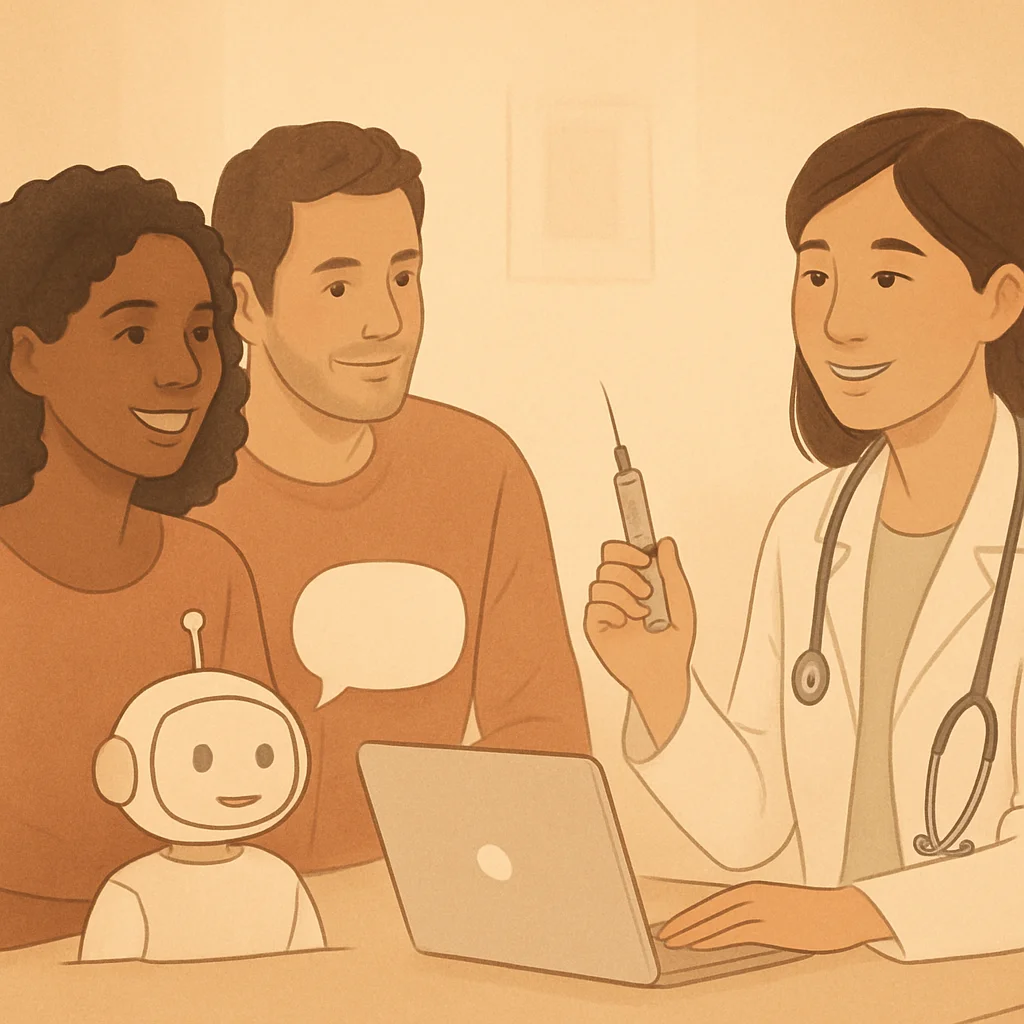
A study highlighted by CIDRAP found that parents who interacted with AI chatbots about the HPV vaccine showed a meaningful short-term increase in their willingness to vaccinate their children. The chatbots were able to answer questions, address common concerns, and present accurate information in a conversational, accessible way — something traditional pamphlets or even doctor visits sometimes struggle to do in a rushed 15-minute appointment.
However, the research also revealed a significant limitation: the boost in vaccine willingness didn't last. Over time, parents' intentions tended to fade back toward their original hesitancy. This tells us something important — information alone, even delivered brilliantly, isn't always enough to create lasting behavior change. Follow-up, community support, and ongoing conversation all play a critical role.
Why HPV Vaccination Is Personal for Our Community
For members of MeetPositives, HPV isn't an abstract acronym. It's a virus that many of us live with, have been diagnosed with, or navigate in our relationships every day. HPV is the most common sexually transmitted infection in the world, and while most infections clear on their own, certain high-risk strains can lead to cervical cancer, throat cancer, anal cancer, and other serious conditions.
The HPV vaccine — available as Gardasil 9 — is one of the most powerful preventive tools we have. It protects against the strains most likely to cause cancer and genital warts, and it's most effective when given before exposure, which is why vaccination in preteens and teens is so strongly recommended. For our community, advocating for HPV vaccination in the next generation is an act of love and protection.
The Promise and the Pitfall of AI Health Information
There's something genuinely exciting about the idea of AI chatbots helping demystify vaccines. Many parents hesitate not because they're anti-vaccine, but because they have real, unanswered questions — about side effects, about timing, about whether the vaccine is really necessary if their child isn't sexually active yet. AI tools can meet parents where they are, without judgment, and provide evidence-based answers in plain language.
That said, the short-term nature of the effect is a red flag we shouldn't ignore. Good information delivered once rarely changes deeply held beliefs or long-standing habits. This is true whether we're talking about vaccine hesitancy, STI stigma, or any other health behavior. The research underscores the need for sustained engagement — not just a single chatbot conversation, but ongoing support from healthcare providers, trusted community voices, and spaces like this one where open dialogue is encouraged.
What This Means for STI Awareness Broadly
The findings from this HPV vaccine study have implications that stretch well beyond childhood vaccination. They remind us that:
- Accessible, stigma-free information matters. When people feel judged, they shut down. When they feel heard and respected, they engage — and AI chatbots, at their best, can offer that non-judgmental space.
- One conversation is rarely enough. Whether it's convincing a hesitant parent to vaccinate or supporting a newly diagnosed person in disclosing to a partner, lasting change requires repeated, compassionate touchpoints.
- Community is irreplaceable. Technology can inform, but human connection is what sustains us. This is precisely why platforms like MeetPositives exist — not just to connect people romantically, but to build a community of people who truly get it.
- We all have a role in reducing stigma. When our community speaks openly about HPV, herpes, HIV, and other STIs, we help normalize these conversations for everyone — including the parents who are quietly Googling vaccine questions at midnight.
A Practical Takeaway for MeetPositives Members
If you have children, younger siblings, nieces, nephews, or any young people in your life, consider starting a conversation about the HPV vaccine. You don't need to share your own diagnosis or medical history — you simply need to be a trusted voice saying, "This vaccine is important, and it's safe." Your lived experience with an STI gives you a perspective that most people don't have, and that perspective can be profoundly persuasive.
If the parents in your life have questions, point them toward credible resources like the CDC, the American Cancer Society, or their child's pediatrician. And if they want to chat with an AI tool to work through their hesitations first? That's a perfectly valid starting point — just encourage them to follow up with their doctor to keep that momentum going.
For those of you who weren't vaccinated as teens and are wondering about your own options: the HPV vaccine is now approved for adults up to age 45. It's worth a conversation with your healthcare provider to find out whether it might still benefit you.
The Bottom Line
AI chatbots are a fascinating and genuinely useful tool in the fight to improve public health literacy around HPV and vaccination. The research showing a short-term boost in parental willingness is encouraging — it proves that the right information, delivered in the right way, can shift perspectives. But it also reminds us that lasting change lives in community, consistency, and compassion.
That's something we at MeetPositives know deeply. Living with or loving someone with an STI teaches you that one conversation — however good — is just the beginning. It's the ongoing support, the shared stories, and the community that holds us that makes the real difference. Keep talking, keep advocating, and keep showing up for each other.
Share This Story, Choose Your Platform!
Kayla Bactung
Comments (0)
Ask A Question
Have A Question, Personal Story, Or Situation You'd Like Help With? Share It Here. The More Context You Include, The More Thoughtful And Useful Our Guidance Can Be.
Our Editorial Team (And Occasional Relationship Contributors) May Choose Selected Submissions To Answer In An Upcoming Blog Post. All Submissions Are Reviewed And Published Anonymously—We Will Never Include Identifying Details.
Important:
If Your Question Is About Your Account, Billing, Upgrades, Reports, Or Technical Issues, Please Contact Customer Care Through The Help Pages So We Can Assist You Faster.
Tips For A Better Answer (Optional):
- Your Age Range + What You're Looking For (Dating, Friendship, Support)
- What You've Tried So Far
- What You're Hoping Happens Next
- Any Boundaries Or Dealbreakers You Want Respected
Responses Shared Here Are For General Information Only And Aren't Medical, Legal, Or Mental-Health Advice.
We Can't Provide Real-Time Or One-On-One Support Through This Form.