
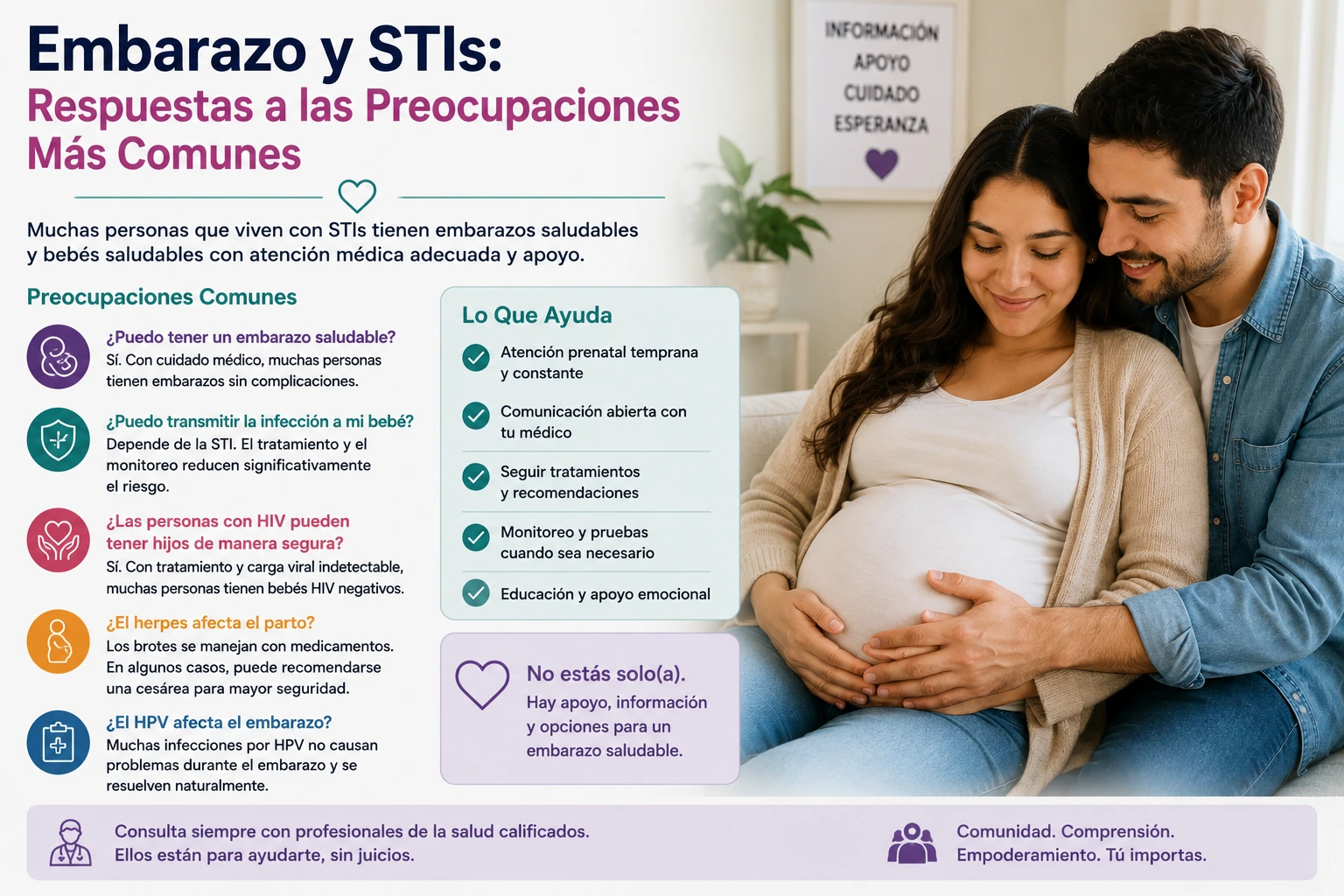
Pregnancy, STIs & Positives: Common Worries Answered
Pregnancy, STIs & Positives: Common Worries Answered
For many people, pregnancy after an STI diagnosis can feel emotionally overwhelming. Fear, confusion, anxiety, and guilt are common concerns—especially when thinking about a baby's health and future.
Many people ask questions such as:
- “Can I still have a healthy pregnancy?”
- “Will I pass this to my baby?”
- “Can people with HIV safely have children?”
- “Does herpes affect delivery?”
The good news is that many people living with STIs continue having healthy pregnancies, healthy relationships, and healthy families with proper medical care and support.
This guide explores common fears around pregnancy and STIs, what people often misunderstand, and why education matters more than panic.
Pregnancy After an STI Diagnosis Is More Common Than People Realize
Many people assume an STI diagnosis means they cannot safely become parents.
In reality, many people living with:
- Herpes (HSV)
- HPV
- HIV
- Other manageable STIs
continue having healthy pregnancies and children.
Modern medicine, testing, monitoring, and treatment have significantly improved pregnancy outcomes for many conditions.
According to the CDC, proper prenatal care and STI management can significantly reduce complications and improve outcomes for both parent and baby.
Common Pregnancy Fears After Diagnosis
People commonly report fears such as:
- Transmission to the baby
- Complications during delivery
- Judgment from healthcare providers
- Fear of relationships or future family planning
- Feeling guilty or ashamed
Many people say anxiety immediately after diagnosis was far worse than the actual medical reality they later learned.
If you're struggling emotionally, you may also find support in:
- My Life Isn't Over: Emotional Coping After an STD Diagnosis
- The Mental Health Impact of STI Testing Stigma
Understanding Herpes & Pregnancy
Herpes is one of the most discussed STIs during pregnancy.
Many people worry about:
- Outbreaks during pregnancy
- Transmission during delivery
- Whether a C-section may be needed
Healthcare providers often monitor herpes carefully during pregnancy, especially near delivery.
Management strategies may include:
- Antiviral medication
- Monitoring for outbreaks
- Discussing delivery options
The CDC Herpes Resource Center provides guidance on herpes management during pregnancy and delivery planning.
Additional resources:
- First Herpes Outbreak or Positive Test: What to Expect
- Herpes Disclosure: How, When, and What Real People Wish They Knew
Understanding HIV & Pregnancy
Modern HIV treatment has dramatically changed pregnancy outcomes.
With consistent medical care and viral suppression, many people living with HIV have healthy pregnancies and HIV-negative babies.
Many discussions also involve U=U:
Undetectable = Untransmittable.
Accurate medical guidance and treatment remain extremely important throughout pregnancy.
According to the CDC, proper HIV treatment during pregnancy can dramatically reduce the risk of transmission to a baby.
Related reading:
Understanding HPV & Pregnancy
HPV also creates anxiety for many pregnant people.
However, many HPV infections:
- Cause no symptoms
- Resolve naturally
- Do not directly affect pregnancy
Healthcare providers may monitor abnormal cervical changes when necessary.
The CDC HPV Resource Center notes that most HPV infections do not interfere with pregnancy outcomes.
You may also find helpful:
Why Communication with Healthcare Providers Matters
Many people report feeling embarrassed discussing STIs during pregnancy.
However, open communication with qualified healthcare professionals may help:
- Reduce anxiety
- Improve monitoring
- Support healthy delivery planning
- Provide accurate medical guidance
Education and medical support often reduce fear significantly.
Never hesitate to ask questions about testing, treatment, medications, or delivery options.
Emotional Healing Matters Too
Many people living with STIs struggle emotionally with:
- Shame
- Fear of judgment
- Anxiety about motherhood or parenthood
- Relationship worries
Many support communities repeatedly remind people that:
- An STI does not define your worth
- You can still have healthy relationships
- You can still become a parent
- You are not alone
Many people discover that emotional support, education, and accurate information are just as important as medical care.
What Many People Wish They Knew Earlier
Across online communities, several recurring themes appear:
- Healthy pregnancies are still possible
- Medical treatment has improved dramatically
- Fear is often worse than reality
- Supportive healthcare providers exist
- Education helps reduce panic
Many people say accurate medical information helped them emotionally far more than fear-based internet comments.
Family Planning Is Still Possible
A diagnosis does not automatically eliminate future family goals.
Many people living with STIs successfully:
- Build families
- Have healthy pregnancies
- Maintain healthy relationships
- Raise children
Modern healthcare provides far more options and support than many people initially realize.
Meet Positives supports informed, respectful, and emotionally safe conversations around STI awareness, relationships, and family planning through its:
FAQ
Can people with STIs still have healthy pregnancies?
Yes. Many people living with STIs continue having healthy pregnancies and healthy children with proper medical care.
Can herpes affect delivery?
Healthcare providers may monitor outbreaks closely near delivery and discuss treatment or delivery options when needed.
Can people living with HIV safely have children?
Yes. Modern HIV treatment and viral suppression have dramatically improved pregnancy outcomes.
Does HPV always affect pregnancy?
Not necessarily. Many HPV infections do not directly affect pregnancy.
Why is medical guidance important during pregnancy?
Professional medical monitoring helps support healthy pregnancies, reduce risks, and provide accurate information.
Medical Disclaimer
This article is for educational and informational purposes only and should not be considered medical advice. Always consult qualified healthcare professionals regarding pregnancy, STI testing, diagnosis, treatment, delivery planning, or sexual health concerns.
Bottom Line
Pregnancy after an STI diagnosis can feel emotionally frightening at first, but many people continue building healthy families, healthy relationships, and healthy futures with proper support and medical care.
Education, communication, and compassionate healthcare often reduce fear far more effectively than panic or stigma.
Join the Meet Positives Community
Looking for support, understanding, and meaningful connections? Meet Positives provides a welcoming environment where people can build relationships, discuss health concerns openly, and connect without judgment.
You can join free, browse our STD Dating community, explore Herpes Dating, HIV Dating, and HPV Dating, visit the Safety Center, read more Mental Health & Stigma articles, or learn more on the Meet Positives homepage.
Share This Story, Choose Your Platform!
Current User
Comments (0)
Ask A Question
Have A Question, Personal Story, Or Situation You'd Like Help With? Share It Here. The More Context You Include, The More Thoughtful And Useful Our Guidance Can Be.
Our Editorial Team (And Occasional Relationship Contributors) May Choose Selected Submissions To Answer In An Upcoming Blog Post. All Submissions Are Reviewed And Published Anonymously—We Will Never Include Identifying Details.
Important:
If Your Question Is About Your Account, Billing, Upgrades, Reports, Or Technical Issues, Please Contact Customer Care Through The Help Pages So We Can Assist You Faster.
Tips For A Better Answer (Optional):
- Your Age Range + What You're Looking For (Dating, Friendship, Support)
- What You've Tried So Far
- What You're Hoping Happens Next
- Any Boundaries Or Dealbreakers You Want Respected
Responses Shared Here Are For General Information Only And Aren't Medical, Legal, Or Mental-Health Advice.
We Can't Provide Real-Time Or One-On-One Support Through This Form.