
How Stress Triggers Herpes Outbreaks (And What Helps)
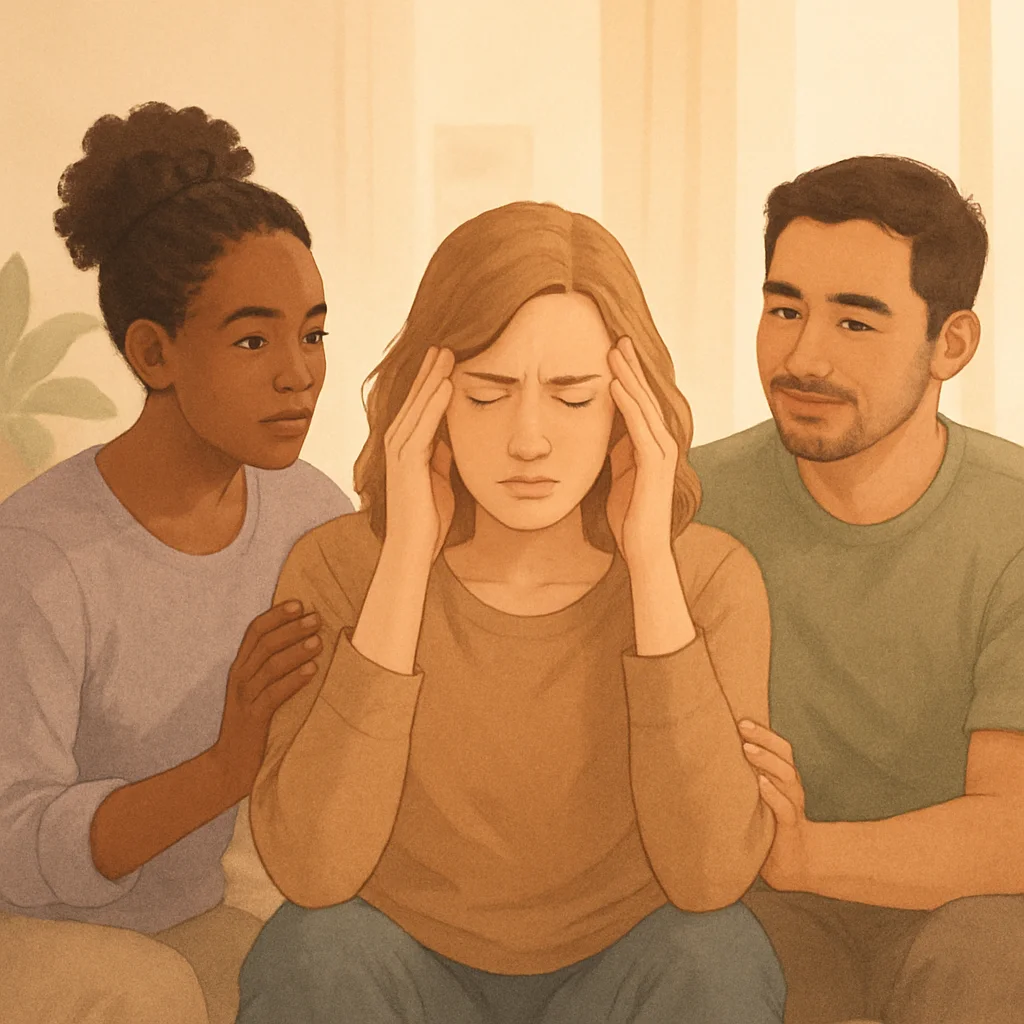
You notice the familiar tingle on a Sunday night, two days before a brutal work deadline. Or after a fight with someone you love. Or right in the middle of a stretch where everything feels like too much. If you live with herpes and this pattern sounds familiar, you're not imagining it. Stress really does trigger outbreaks — and the biology behind it is more direct than most people realize.
Why Stress and Herpes Are Biologically Linked
HSV-1 and HSV-2 don't disappear after your first outbreak. The virus retreats to nerve ganglia — clusters of nerve cells near your spine — and stays dormant until something wakes it up.
Stress is one of the most reliable things that can do exactly that. When you're under pressure, your body releases cortisol, the primary stress hormone. In short bursts, cortisol is protective. But when it stays elevated for days or weeks, it suppresses the immune cells — particularly CD8+ T cells — that keep HSV in check.
"Psychological stress is consistently associated with HSV reactivation. Research shows that life stress, negative affect, and daily stressors all increase the likelihood of symptomatic and asymptomatic viral shedding." — Glaser & Kiecolt-Glaser, Brain, Behavior, and Immunity, 1999
In other words, your immune system is doing less of the work it normally does to suppress the virus — and the virus takes the opening.
Not All Stress Hits the Same Way
There's a difference between the stress that spikes and passes — a job interview, a hard conversation — and the kind that grinds on for weeks. Chronic stress is significantly more damaging to immune function than acute stress.
A landmark meta-analysis published in Psychological Bulletin found that chronic stressors lasting longer than a month produced the most consistent and severe immune suppression. If you've noticed that outbreaks tend to cluster during prolonged hard periods — a difficult relationship, financial strain, grief — this is likely why.
Emotional stress and physical stress both count, too. Illness, poor sleep, overtraining, or even long travel can suppress immunity in similar ways. (If sleep in particular seems to coincide with your flare-ups, our piece on how sleep affects herpes outbreaks breaks down that connection in detail.)
What You Can Actually Do About It
You can't eliminate stress from your life. But you can reduce how much of it lands in your nervous system — and there's real evidence that this changes outbreak frequency.
Antiviral suppressive therapy. If you're on daily antivirals like valacyclovir or acyclovir, keep taking them consistently — especially during high-stress periods. Suppressive therapy significantly reduces both symptomatic outbreaks and asymptomatic shedding. Talk to your doctor if you're only taking antivirals episodically but finding that stress-related outbreaks are frequent.
Mindfulness-based stress reduction (MBSR). This isn't soft advice. A controlled study found that MBSR programs measurably reduced HSV recurrences in participants compared to a control group. Eight weeks of structured mindfulness practice changed immune markers. You don't need a formal program — consistent daily practice of even 10 minutes matters.
Exercise — the right amount. Moderate, regular exercise lowers cortisol and supports immune function. The key word is moderate. Intense overtraining can actually suppress immunity and trigger an outbreak. A brisk 30-minute walk most days does more for your viral load management than an occasional brutal gym session.
Social connection. Research consistently links social isolation to elevated cortisol and weakened immune response. People with strong support networks have fewer and less severe HSV recurrences. This isn't a coincidence. Connection is biology.
Breaking the Anxiety-Outbreak Cycle
Here's a cruel loop many people with herpes fall into: stress triggers an outbreak, the outbreak causes anxiety, the anxiety creates more stress, and that stress increases the risk of the next outbreak.
If you recognize yourself in that pattern, you're not alone — and naming the cycle is the first step to interrupting it. Some practical ways to break it:
- Track your outbreaks and stress levels together in a simple journal or app. Patterns become visible quickly, and visibility reduces the sense of randomness that feeds anxiety.
- Have a standing plan for when you feel prodromal symptoms — know what you'll take, how you'll adjust your schedule, and remind yourself that an outbreak is manageable, not a catastrophe.
- Talk to a therapist who understands chronic health conditions. The psychological weight of managing herpes is real, and working through it with a professional isn't optional for some people — it's the most practical health decision you can make.
Understanding the emotional side of your diagnosis matters just as much as the medical side. If you're still processing what it means to date and connect with others, how people with herpes rebuilt their confidence in dating is worth reading alongside this.
When to Talk to Your Doctor
If you're having more than six outbreaks a year, or if outbreaks are reliably triggered by predictable stress patterns, bring that up with your doctor. It may mean adjusting your suppressive therapy dosage during high-stress periods, or exploring whether an underlying mental health condition like anxiety is playing a bigger role than you've acknowledged.
Some people also benefit from low-dose antidepressants or anti-anxiety medications not just for mood, but because reducing chronic physiological stress load has measurable downstream effects on immune function. It's a conversation worth having.
Living with herpes doesn't mean living in fear of your next outbreak. The more you understand your own triggers — and stress is the biggest one for most people — the more control you actually have. This community gets that. You're not managing a virus in isolation; you're managing a whole life, and the two are connected in ways that are worth paying attention to.
Share This Story, Choose Your Platform!
Kayla Bactung
Comments (0)
Ask A Question
Have A Question, Personal Story, Or Situation You'd Like Help With? Share It Here. The More Context You Include, The More Thoughtful And Useful Our Guidance Can Be.
Our Editorial Team (And Occasional Relationship Contributors) May Choose Selected Submissions To Answer In An Upcoming Blog Post. All Submissions Are Reviewed And Published Anonymously—We Will Never Include Identifying Details.
Important:
If Your Question Is About Your Account, Billing, Upgrades, Reports, Or Technical Issues, Please Contact Customer Care Through The Help Pages So We Can Assist You Faster.
Tips For A Better Answer (Optional):
- Your Age Range + What You're Looking For (Dating, Friendship, Support)
- What You've Tried So Far
- What You're Hoping Happens Next
- Any Boundaries Or Dealbreakers You Want Respected
Responses Shared Here Are For General Information Only And Aren't Medical, Legal, Or Mental-Health Advice.
We Can't Provide Real-Time Or One-On-One Support Through This Form.