
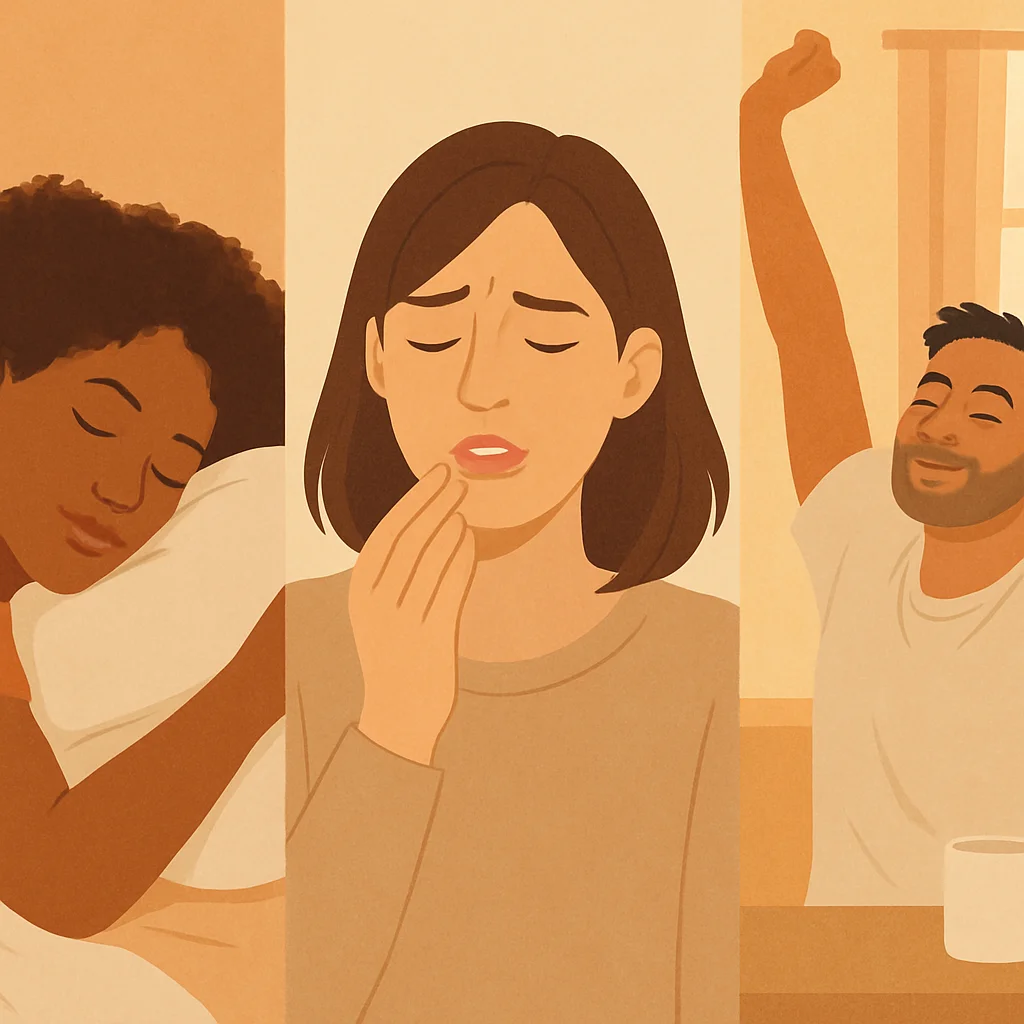
How Sleep Affects Herpes Outbreaks (And What to Do)
You did everything right — took your antiviral, avoided your known triggers, kept stress mostly in check. And then a week of bad sleep later, there it is: that familiar tingle. If you've noticed that outbreaks seem to show up after rough nights, you're not imagining it. Sleep and immune function are deeply connected, and for people living with HSV-1 or HSV-2, that connection is very real and very worth understanding.
Why Your Immune System Needs Sleep to Keep HSV in Check
Herpes simplex virus doesn't go away after your first outbreak — it retreats to nerve ganglia and stays dormant, held there by your immune system. That's not a passive process. Your body is actively suppressing viral reactivation every single day.
Sleep is when much of that immune maintenance happens. During deep sleep, your body ramps up production of cytokines — signaling proteins that help coordinate your immune response against viruses. Research from the NIH shows that even one or two nights of poor sleep can reduce natural killer cell activity — the very cells that help keep latent viruses like HSV from reactivating.
When those defenses weaken, even briefly, HSV can seize the window to travel back down nerve pathways and cause an outbreak.
What the Research Actually Shows
A 2021 study published in JAMA Internal Medicine found that people who slept fewer than six hours a night had significantly higher rates of viral reactivation events compared to those who consistently got seven to eight hours. While that study looked broadly at viral illnesses, the immune pathways involved are directly relevant to HSV suppression.
More specifically, a study published in Sleep found that sleep deprivation reduces the production of antiviral antibodies and impairs T-cell function — both of which play a direct role in controlling herpes simplex virus.
"Sleep is not a luxury for immune health — it is a core requirement. The immune surveillance that keeps latent viruses dormant depends heavily on restorative sleep cycles." — Dr. Aric Prather, psychologist and sleep researcher at UCSF
This is one reason doctors who specialize in HSV management often ask patients about sleep quality, not just medication adherence, when outbreaks become frequent.
Sleep Deprivation, Cortisol, and the Stress Loop
Here's where it gets a little circular: poor sleep raises cortisol, the body's primary stress hormone. High cortisol suppresses immune function. And if you already know that stress is one of your outbreak triggers, you can see exactly how a few bad nights can snowball into a flare.
This isn't just theory. The CDC links chronic poor sleep to elevated inflammatory markers and weakened immune defenses — a combination that makes it harder for your body to keep any latent virus in check, including HSV.
The good news is that this loop works in reverse too. When you prioritize sleep, cortisol drops, immune function improves, and your body does a better job suppressing viral activity. It's one of the most underrated wellness tools available to you, and it costs nothing.
Practical Steps to Protect Your Sleep (and Your Immune System)
You don't need to overhaul your entire life. A few consistent changes make a measurable difference.
Set a hard lights-out time. Your immune system benefits most from consistent sleep schedules. Going to bed at wildly different times each night disrupts circadian rhythms and reduces deep sleep — which is exactly when immune restoration peaks.
Cut the late-night screen time. Blue light from phones and laptops suppresses melatonin production, which delays sleep onset and reduces sleep quality. Put the phone down 45 minutes before bed. Yes, really.
Watch the alcohol. A glass of wine might feel like it helps you wind down, but alcohol fragments sleep architecture and reduces REM sleep — the phase most associated with immune recovery. If you're in the middle of an outbreak or feel one coming on, this is a good time to skip it.
Cool your room down. Your core body temperature naturally drops during sleep. A room between 65 and 68°F helps that process happen faster and supports deeper sleep stages.
Track your outbreaks and your sleep. Keep a simple log — even in your phone's notes app. You may start to notice a consistent pattern between sleep quality and outbreak timing, which gives you actionable data, not just a vague sense that something's off.
How This Fits Into Your Overall Management Strategy
Sleep isn't a replacement for antivirals or other protective measures — it's one layer in a broader approach. If you're already on suppressive therapy like valacyclovir and still experiencing outbreaks more often than you'd like, sleep quality is one of the first lifestyle factors worth examining honestly.
It also helps to understand the full picture of what your body is dealing with. If you haven't read up on how HSV behaves asymptomatically, our post on asymptomatic herpes and why most people never know they have it gives important context for understanding your own viral activity — including when you might be shedding without any symptoms at all.
And if managing outbreaks is something you think about in the context of dating and relationships, it's worth reading about layering protection strategies that actually work — because sleep, antivirals, and barrier methods together give you far more coverage than any single approach alone.
If outbreaks are affecting your confidence or your relationships, you're not alone in that. Many people in this community have gone through exactly that, and rebuilding confidence in dating after herpes is something real people have done — and written about honestly.
Living with herpes means paying attention to your body in ways most people don't have to think about. That can feel like a burden sometimes, but it also gives you a real advantage: you have strong reasons to take care of yourself in ways that benefit every part of your health. Sleep is one of those things. Start there, track what changes, and give your immune system the nightly reset it needs to do its job.
Share This Story, Choose Your Platform!
Kayla Bactung
Comments (0)
Ask A Question
Have A Question, Personal Story, Or Situation You'd Like Help With? Share It Here. The More Context You Include, The More Thoughtful And Useful Our Guidance Can Be.
Our Editorial Team (And Occasional Relationship Contributors) May Choose Selected Submissions To Answer In An Upcoming Blog Post. All Submissions Are Reviewed And Published Anonymously—We Will Never Include Identifying Details.
Important:
If Your Question Is About Your Account, Billing, Upgrades, Reports, Or Technical Issues, Please Contact Customer Care Through The Help Pages So We Can Assist You Faster.
Tips For A Better Answer (Optional):
- Your Age Range + What You're Looking For (Dating, Friendship, Support)
- What You've Tried So Far
- What You're Hoping Happens Next
- Any Boundaries Or Dealbreakers You Want Respected
Responses Shared Here Are For General Information Only And Aren't Medical, Legal, Or Mental-Health Advice.
We Can't Provide Real-Time Or One-On-One Support Through This Form.