
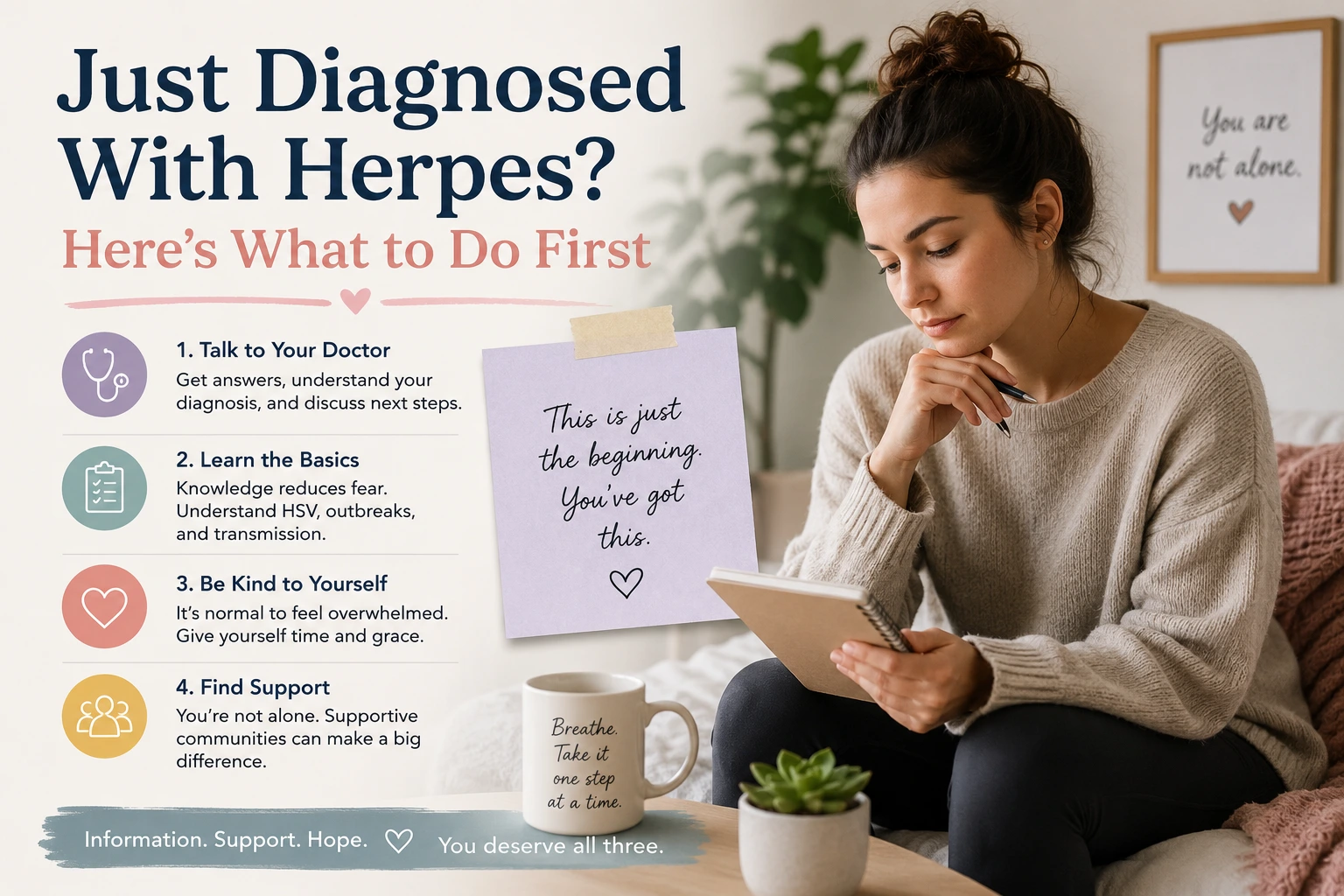
Just Diagnosed With Herpes?
Just Diagnosed With Herpes? Here's What to Do First
Getting a herpes diagnosis can feel like the floor dropped out from under you. The fear, the shame, the questions spinning in your head — Who will want me now? Did I do something wrong? Is my life over? It's not. Here's what you actually need to know right now.
First: What You're Feeling Is Normal
Almost everyone who receives a herpes diagnosis goes through some version of shock, grief, or shame — even though herpes is one of the most common viral infections on earth. The World Health Organization (WHO) estimates that 3.7 billion people under 50 have HSV-1, and approximately 491 million people aged 15–49 have HSV-2 globally.
The reason a diagnosis feels so devastating is stigma — not the virus itself. HSV is a skin condition that lives in nerve tissue. It is manageable, common, and for the vast majority of people, does not significantly impact daily life.
Step 1: Breathe and Get the Facts
The first thing to do is separate the fear from the facts. Much of what makes a herpes diagnosis feel catastrophic is misinformation and social stigma — not the medical reality of the virus.
Key facts to hold onto right now:
- Herpes is not life-threatening for healthy adults
- Most people with herpes live entirely normal lives — you likely know several people who have it
- Outbreaks become less frequent over time for most people
- Effective medication exists — antivirals can reduce outbreak frequency by up to 75%
- You can and will date again — millions of people with herpes are in loving relationships
- You are not defined by this diagnosis
Step 2: Talk to Your Doctor
Your healthcare provider is your most important resource right now. Schedule a follow-up if you haven't already — specifically to discuss:
- Antiviral suppressive therapy (valacyclovir or acyclovir)
- HSV type (1 or 2) — if not already confirmed
- How to recognize early outbreak symptoms (prodrome)
- Safe sex practices going forward
- Other STI testing as appropriate
- When or how you got it — often impossible to know
- Telling people before you're ready
- What this means for your future relationships
- Any decision that doesn't need to be made today
Step 3: Give Yourself Time to Process
It is completely normal to feel angry, sad, or overwhelmed in the days and weeks after a diagnosis. These feelings are real and valid. According to mental health professionals, a herpes diagnosis can trigger a genuine grief process — not because herpes is tragic, but because it challenges your self-image and future plans in ways that take time to reframe.
Some strategies that help:
- Talk to someone you trust — a close friend, family member, or therapist
- Join a support community — online or in-person groups of people with HSV can dramatically reduce isolation
- Limit research rabbit holes — forums filled with worst-case stories are not representative of most people's experience
- Be kind to yourself — how you talk to yourself in the first weeks matters enormously
- Consider speaking with a therapist who specializes in sexual health or chronic illness
Step 4: Understand Disclosure Before You Need to Use It
At some point — when you're ready — disclosure becomes part of dating with herpes. The good news: the disclosure conversation is almost universally less catastrophic than people fear. Most people who care about you will respond with understanding, not rejection.
There's no single right way or right time to disclose. The most important principles are:
- Disclose before any sexual contact, not during
- Choose a calm, private moment — not a high-emotion or rushed situation
- Have accurate information ready about transmission risk and your management approach
- Give your partner time to process — don't expect an immediate answer
- Rejection after disclosure is painful but says nothing about your worth as a person
For a more detailed guide, read: What to Say When You Disclose HSV and Herpes Disclosure: What Real People Wish They Knew.
Step 5: Consider the Kind of Community You Want Around You
One of the most powerful things you can do after a herpes diagnosis is find your people — people who genuinely understand what you're navigating without needing an explanation.
Meet Positives is a dating and community platform built specifically for people living with HSV and other STIs. Members aren't here despite their diagnosis — they're here because a community that removes the disclosure barrier from the very first conversation changes everything.
- American Sexual Health Association (ASHA) — education, support, and helpline
- Planned Parenthood — non-judgmental sexual health information
- CDC Get Tested — find testing centers near you
- Newly Diagnosed With an STI: Here's What to Do First — Meet Positives guide
- How to Start Dating After a Herpes Diagnosis — Meet Positives guide
Meet Positives is a community where your diagnosis is already understood — and no one needs an explanation. Start connecting with people who get it.
Explore the Community → Read: Dating After DiagnosisThis article is for informational purposes only and does not constitute medical advice. Sources: WHO Global HSV Fact Sheet, CDC Herpes Statistics, American Sexual Health Association, Planned Parenthood sexual health resources. If you are experiencing emotional distress related to your diagnosis, please speak with a healthcare provider or licensed therapist.
Share This Story, Choose Your Platform!
Kayla Bactung
Comments (0)
Ask A Question
Have A Question, Personal Story, Or Situation You'd Like Help With? Share It Here. The More Context You Include, The More Thoughtful And Useful Our Guidance Can Be.
Our Editorial Team (And Occasional Relationship Contributors) May Choose Selected Submissions To Answer In An Upcoming Blog Post. All Submissions Are Reviewed And Published Anonymously—We Will Never Include Identifying Details.
Important:
If Your Question Is About Your Account, Billing, Upgrades, Reports, Or Technical Issues, Please Contact Customer Care Through The Help Pages So We Can Assist You Faster.
Tips For A Better Answer (Optional):
- Your Age Range + What You're Looking For (Dating, Friendship, Support)
- What You've Tried So Far
- What You're Hoping Happens Next
- Any Boundaries Or Dealbreakers You Want Respected
Responses Shared Here Are For General Information Only And Aren't Medical, Legal, Or Mental-Health Advice.
We Can't Provide Real-Time Or One-On-One Support Through This Form.