
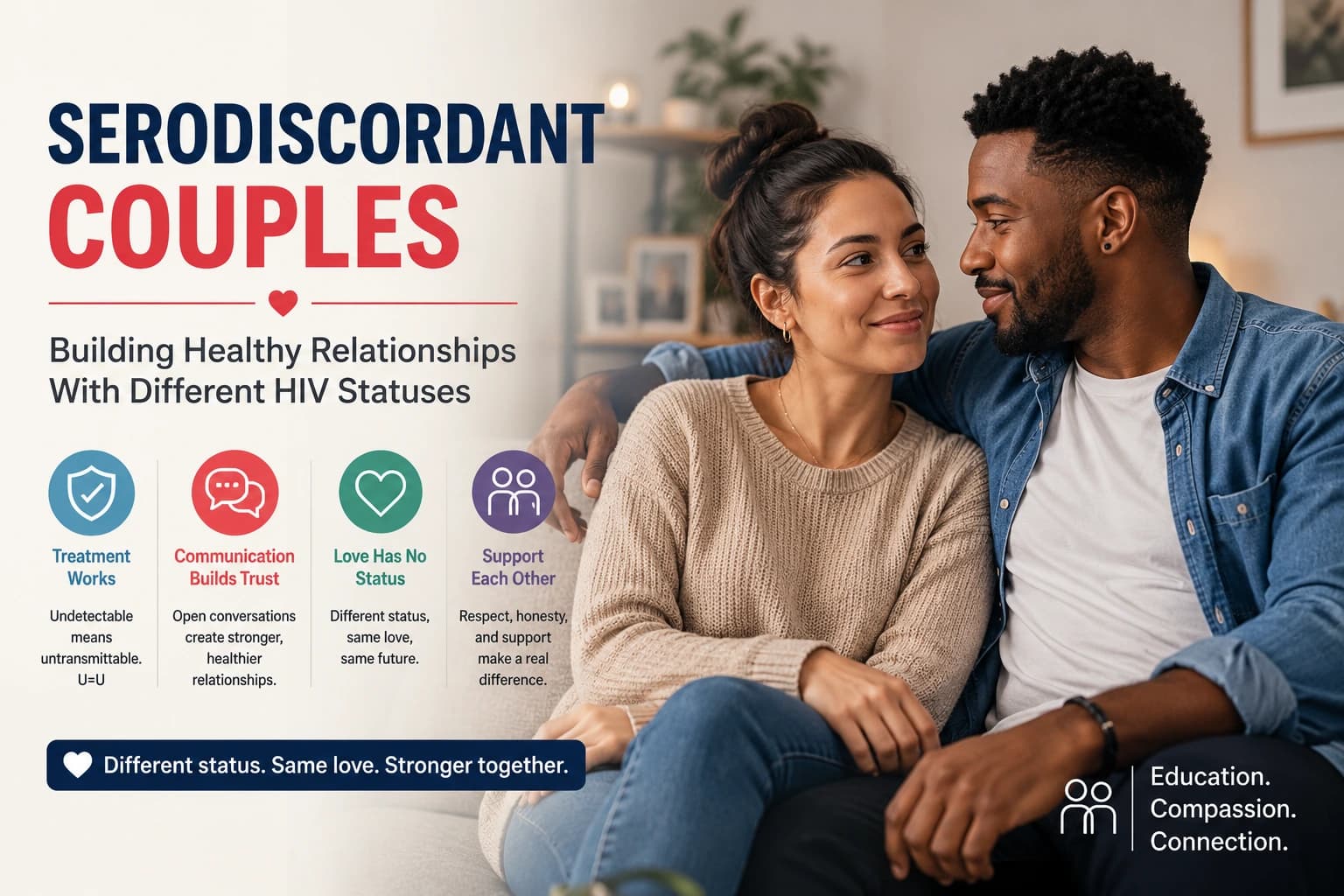
Serodiscordant Couples: Building Healthy Relationships With Different HIV Statuses
A serodiscordant relationship is when one partner is HIV-positive and the other is HIV-negative. While some people may feel uncertain about dating with different HIV statuses, many serodiscordant couples build strong, healthy, and long-lasting relationships.
With modern treatment, education, and open communication, relationships between partners with different HIV statuses are safer and more manageable than ever before.
What Does Serodiscordant Mean?
The term “serodiscordant” simply means two partners have different HIV statuses. One partner may be living with HIV while the other partner is HIV-negative.
These relationships are more common than many people realize and can be just as loving and successful as any other relationship.
Communication Is Essential
Healthy communication plays a major role in any relationship, but it becomes even more important in serodiscordant relationships.
Partners should feel comfortable discussing:
- Health and treatment plans
- Boundaries and comfort levels
- Protection and prevention options
- Questions or concerns without judgment
Open conversations help reduce fear and build trust between partners.
Understanding U=U
One of the biggest medical advancements in HIV awareness is U=U, which stands for “Undetectable = Untransmittable.”
This means that individuals living with HIV who maintain an undetectable viral load through consistent treatment cannot sexually transmit HIV to their partners.
This scientific breakthrough has helped many couples feel more confident and secure in their relationships.
Protection and Prevention Options
Serodiscordant couples have several tools available to help protect both partners and reduce anxiety around transmission.
These may include:
- Consistent HIV treatment
- Regular medical checkups
- Condom use
- PrEP (Pre-Exposure Prophylaxis)
- Routine communication about health
Every couple is different, and healthcare providers can help determine what prevention approach works best for both partners.
Overcoming Fear and Stigma
Many serodiscordant couples face outside stigma or misinformation about HIV. Unfortunately, some people still do not understand how far HIV treatment and prevention have advanced.
Education is important because fear is often rooted in outdated information.
Healthy relationships are built on:
- Trust
- Respect
- Education
- Support
An HIV diagnosis does not make someone less deserving of love or companionship.
Love Is Bigger Than a Diagnosis
Serodiscordant couples prove every day that relationships can thrive despite different HIV statuses.
What matters most is not fear, but how partners support and communicate with one another.
With honesty, proper care, and mutual respect, many couples build happy and fulfilling futures together.
Final Thought
Being in a serodiscordant relationship may come with unique conversations, but it does not prevent real love, intimacy, or long-term commitment.
Modern treatment and awareness have changed what is possible for couples living with HIV.
Strong relationships are built on trust — not stigma.
Looking for supportive connections? Visit our HIV Dating page to connect with singles who understand your journey.
Note: This article is for informational purposes only and does not replace professional medical advice.
Share This Story, Choose Your Platform!
Current User
Comments (0)
Ask A Question
Have A Question, Personal Story, Or Situation You'd Like Help With? Share It Here. The More Context You Include, The More Thoughtful And Useful Our Guidance Can Be.
Our Editorial Team (And Occasional Relationship Contributors) May Choose Selected Submissions To Answer In An Upcoming Blog Post. All Submissions Are Reviewed And Published Anonymously—We Will Never Include Identifying Details.
Important:
If Your Question Is About Your Account, Billing, Upgrades, Reports, Or Technical Issues, Please Contact Customer Care Through The Help Pages So We Can Assist You Faster.
Tips For A Better Answer (Optional):
- Your Age Range + What You're Looking For (Dating, Friendship, Support)
- What You've Tried So Far
- What You're Hoping Happens Next
- Any Boundaries Or Dealbreakers You Want Respected
Responses Shared Here Are For General Information Only And Aren't Medical, Legal, Or Mental-Health Advice.
We Can't Provide Real-Time Or One-On-One Support Through This Form.