
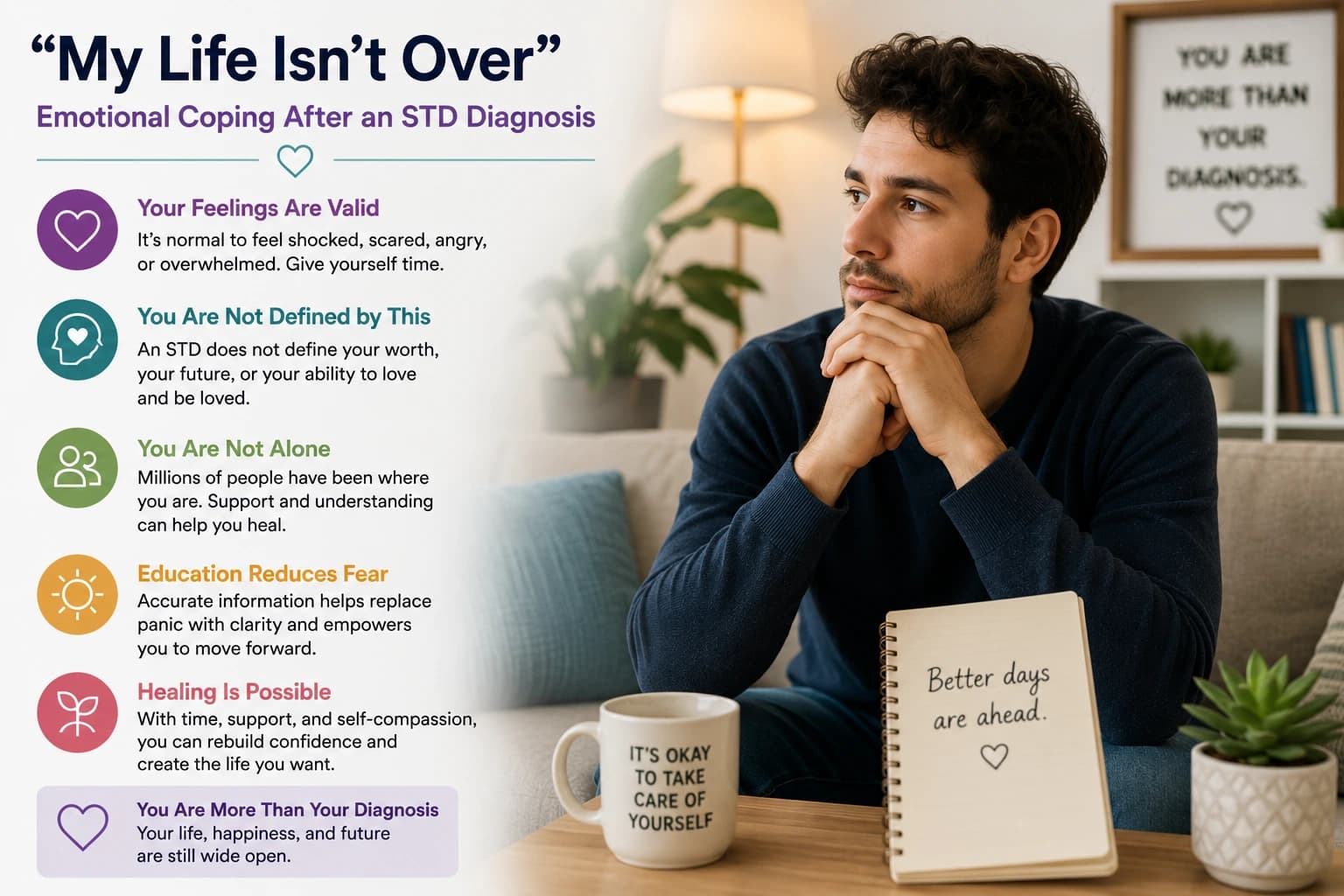
“My Life Isn’t Over”: Emotional Coping After an STD Diagnosis
“My Life Isn’t Over”: Emotional Coping After an STD Diagnosis
For many people, receiving an STD or STI diagnosis can feel emotionally devastating at first. Fear, shame, panic, anger, embarrassment, and anxiety are extremely common reactions immediately after diagnosis.
Across Reddit discussions, support groups, and online sexual health communities, people often express thoughts like:
- “Nobody will ever love me now.”
- “I feel disgusting.”
- “My dating life is over.”
- “I don’t know how to tell anyone.”
However, many people later say they wish they had known one important truth earlier:
Your life is not over.
This guide explores the emotional side of diagnosis, why stigma can feel so overwhelming, and how many people eventually rebuild confidence, intimacy, and emotional stability.
Why an STD Diagnosis Feels So Emotional
For many people, the emotional impact comes less from the condition itself and more from:
- Social stigma
- Fear of rejection
- Misinformation
- Isolation
- Shame surrounding sexuality
Many people describe feeling emotionally spiraled after searching online or reading fear-based comments.
Unfortunately, internet stigma often creates more emotional harm than accurate medical reality.
Common Emotional Reactions After Diagnosis
People commonly report:
- Crying frequently
- Panic attacks
- Difficulty sleeping
- Obsessive Googling
- Fear of dating again
- Avoiding intimacy
- Feeling “damaged” or unwanted
These reactions are extremely common immediately after diagnosis.
Many People Eventually Realize Life Continues
One of the most repeated themes in STD support communities is that people eventually realize:
- They are still lovable
- Healthy relationships still exist
- Dating is still possible
- Supportive partners still exist
- The diagnosis becomes emotionally smaller over time
Many people say the first few weeks or months are emotionally the hardest.
The Problem with Shame-Based Thinking
Many people begin viewing themselves negatively after diagnosis.
Thoughts like:
- “I’m ruined.”
- “Nobody will want me.”
- “I’m dirty.”
are often fueled by stigma rather than reality.
Many support communities repeatedly emphasize that having an STI does not determine:
- Your worth
- Your morality
- Your attractiveness
- Your ability to be loved
Why Education Helps Emotionally
Many people report that learning accurate information dramatically reduced fear and panic.
Understanding topics like:
- Transmission risks
- Treatment options
- U=U
- Suppressive therapy
- How common STIs actually are
often helps replace catastrophic thinking with realistic understanding.
You Do Not Have to Isolate Yourself
Many people initially withdraw emotionally after diagnosis.
However, isolation often increases:
- Anxiety
- Depression
- Shame
- Fear-based thinking
Many people find emotional support through:
- Trusted friends
- Therapy
- Support groups
- Online communities
- People with shared experiences
Dating Confidence Can Return
Many people living with STIs continue building:
- Healthy relationships
- Marriage
- Long-term partnerships
- Emotionally fulfilling intimacy
Many eventually discover that confidence, honesty, communication, and emotional maturity matter far more than they originally feared.
What Real People Often Wish They Knew Earlier
Across online STD communities, many recurring themes appear:
- Life absolutely continues after diagnosis
- Stigma is often worse than the condition itself
- Disclosure becomes easier with time
- Supportive partners still exist
- Emotional healing is possible
Many people say they wish they had spent less time catastrophizing and more time focusing on emotional recovery and accurate information.
MeetPositives supports informed, respectful, and emotionally safe conversations around sexual health, disclosure, and dating through its:
FAQ
Is it normal to panic after an STD diagnosis?
Yes. Fear, anxiety, shame, and emotional overwhelm are extremely common immediately after diagnosis.
Do people still date after an STI diagnosis?
Yes. Many people continue building healthy and fulfilling relationships after diagnosis.
Why does stigma feel worse than the condition itself?
Many emotional struggles come from fear, misinformation, shame, and social stigma rather than the medical condition alone.
Does emotional healing happen over time?
Many people report significant emotional improvement with education, support, therapy, and experience.
Can confidence return after diagnosis?
Yes. Many people eventually rebuild confidence, emotional stability, and healthy intimacy.
Sources
- Curated from recurring discussions across Reddit communities including r/herpes, r/HPV, r/HIV, r/STD, and STI support forums.
- CDC — Sexually Transmitted Diseases (STDs)
Medical Disclaimer
This article is for educational and informational purposes only and should not be considered medical advice. Always consult qualified healthcare professionals regarding STI testing, diagnosis, treatment, mental health support, or sexual health concerns.
Bottom Line
An STI diagnosis may feel emotionally overwhelming at first, but many people eventually discover that life, love, intimacy, confidence, and healthy relationships are still completely possible.
Healing often begins when fear and stigma are replaced with education, support, self-compassion, and honest connection.
Share This Story, Choose Your Platform!
Current User
Comments (0)
Ask A Question
Have A Question, Personal Story, Or Situation You'd Like Help With? Share It Here. The More Context You Include, The More Thoughtful And Useful Our Guidance Can Be.
Our Editorial Team (And Occasional Relationship Contributors) May Choose Selected Submissions To Answer In An Upcoming Blog Post. All Submissions Are Reviewed And Published Anonymously—We Will Never Include Identifying Details.
Important:
If Your Question Is About Your Account, Billing, Upgrades, Reports, Or Technical Issues, Please Contact Customer Care Through The Help Pages So We Can Assist You Faster.
Tips For A Better Answer (Optional):
- Your Age Range + What You're Looking For (Dating, Friendship, Support)
- What You've Tried So Far
- What You're Hoping Happens Next
- Any Boundaries Or Dealbreakers You Want Respected
Responses Shared Here Are For General Information Only And Aren't Medical, Legal, Or Mental-Health Advice.
We Can't Provide Real-Time Or One-On-One Support Through This Form.